





Coins on a Headstone and the Quiet Language Left Behind by Visitors

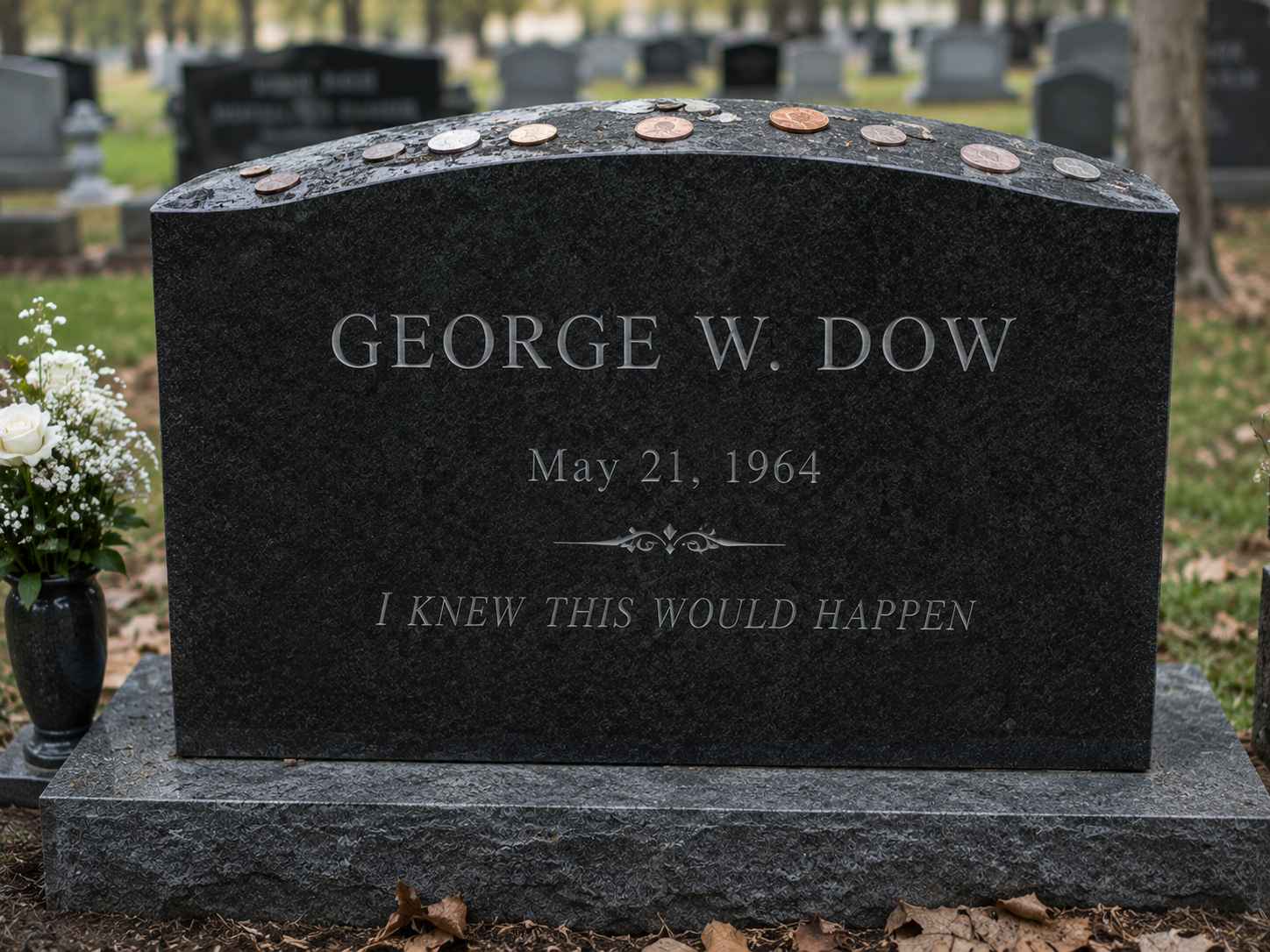
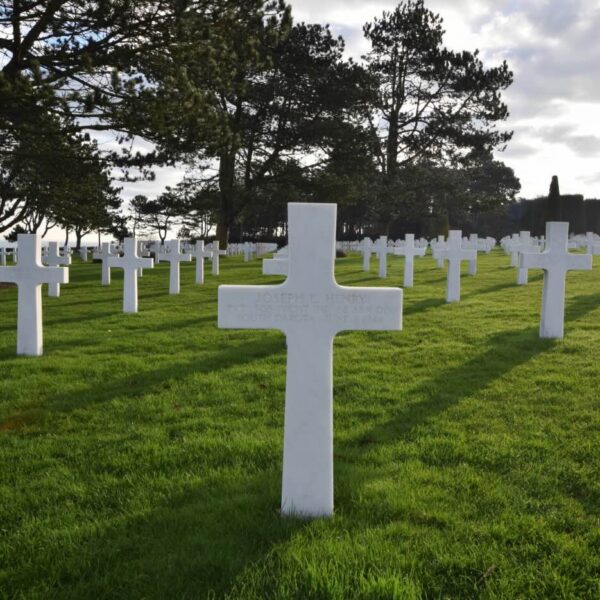
Walk through almost any older cemetery and you will eventually see it. A few coins resting on the top edge of a grave marker, catching the light, sometimes tarnished, sometimes bright and recent. Coins on a headstone are not litter and they are not an accident. They are a message – left by someone who stood there, who knew the person below, and who wanted to say so without words.
The short answer, the one people usually come looking for: a coin left on a grave means someone visited, and the specific coin often signals how the visitor knew the deceased, especially in military cemeteries. But the full story is older and stranger and more human than that, and it is worth slowing down for.
This tradition shows up most in the United States, woven tightly into how veterans and their families remember service. We see it constantly at the cemeteries our crews work in – from the big national grounds down to small-town plots in Oklahoma and Ohio. So let us walk through what it actually means.
What do coins on a headstone mean to the people who leave them
Start with the feeling, because that is what drives it.
When you ask what do coins on a headstone mean, you are really asking what a person was trying to communicate when they had no other way. A coin says I was here. It says you are not forgotten. For a grave that family cannot visit often – maybe they live three states away, maybe the years have thinned the visitors down to almost none – a single coin on the granite is proof that somebody still came, still stood, still remembered the name cut into the stone.
And the meaning of coins on a headstone shifts depending on who left them. Strangers leave them. Old friends leave them. Soldiers leave them for soldiers. The gesture is small, the weight of it is not.
What do coins on military headstones mean and the four denominations
This is where the tradition gets specific, and where most people first hear about it.
Coins on military headstones carry a code, at least by the version that spread widely after the Vietnam era. A penny means simply that you visited and wanted to honor the person. A nickel means you and the deceased trained at boot camp together. A dime means you served with them in some capacity. And a quarter – the heaviest message – means you were there when that service member died.
So coins on a military headstone are read almost like a sentence by the family who finds them. A handful of quarters on a veteran’s grave tells a mother or a widow that the people who were there at the end came back to stand with him again. That is a lot to carry in twenty-five cents. The significance of coins on headstones in these sections runs deep precisely because the message is so exact, and so hard to say any other way.
It is worth saying the code is more tradition than rule. Not every visitor knows it. Some leave a coin just to leave one. But in military cemeteries, enough people know it that the denominations really do speak. So what do coins on headstones mean in these sections – they mean a message read in metal, and coins on headstones military families recognize it instantly.
Why do people put coins on headstones across different cultures
The American military version is recent. The root is ancient.
Why do people put coins on headstones at all – the impulse goes back thousands of years. The ancient Greeks placed a coin with the dead, Charon’s obol, payment for the ferryman who carried the soul across the river Styx. Romans did similar. The idea that the dead needed money for a journey shows up again and again across the old world, and some scholars trace the modern habit loosely back to those beliefs, though the line is fuzzy and honestly nobody can draw it cleanly.
What is clear is that leaving coins on headstones satisfies something people have needed to do for a very long time. The coins left on headstones today echo that old need, even when the visitor has never heard of Charon. A single coin on headstone granite still does the ancient work. Give something. Mark the visit with an object, not just a thought. The coin is small and permanent and a little bit sacred in the moment you set it down.
Coins on headstones meaning in everyday graves, not just military ones
You do not have to be a veteran to receive this.
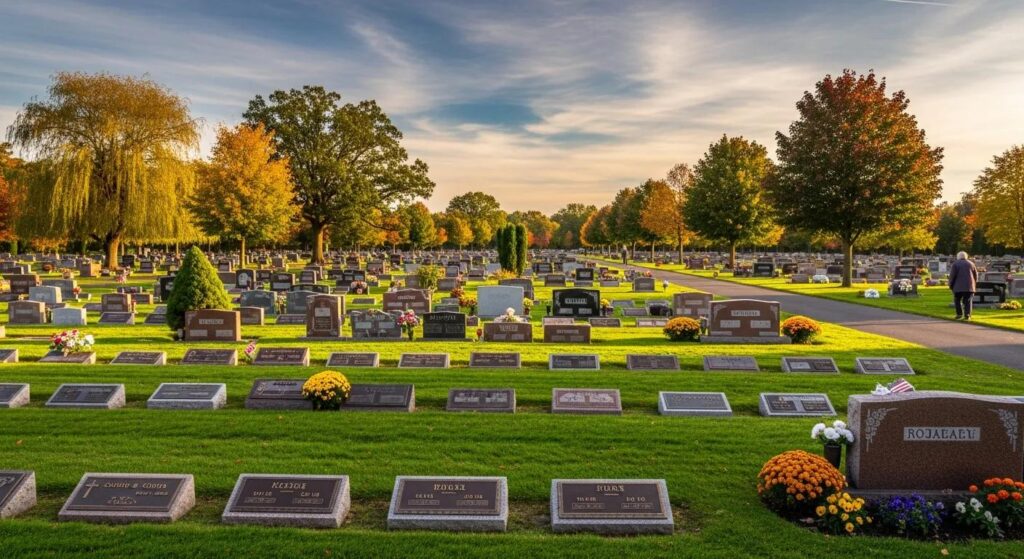
The coins on headstones meaning has widened over the years. Walk a regular cemetery and you will find pennies on the markers of grandmothers, fathers, children. Some families have a quiet habit of it – every visit, a new coin, so the stone slowly collects them. People say a found penny is a hello from someone passed, and a lot of folks fold that belief right into the grave visit, leaving a coin to complete the loop. So the meaning of coins on headstones in ordinary plots is gentler than the military code, but it comes from the same place. I was here. I am thinking of you.
What do coins mean on a headstone in that softer sense? Presence. Continuity. The refusal to let a grave look forgotten. And when people ask what do the coins mean on a headstone of a parent or a child rather than a soldier, the coins headstones meaning is simply that love kept showing up.
Rocks and coins on headstones and the traditions that overlap
Coins are not the only thing left behind, and the customs sit side by side.
Rocks and coins on headstones often appear together, but they come from different roots. The stones are largely a Jewish tradition – visitors place a small pebble on the marker to show they came, a custom thought to go back to ancient burial practices when stones helped mark and protect graves in the desert. Flowers wilt. A stone stays. So in many cemeteries you will see both at once, rocks and coins on headstones in the same row, each carrying its own quiet grammar of remembrance.
We notice this a lot in the mixed cemeteries around our New Jersey and Illinois locations, where different traditions share the same ground. A pebble here, a few coins there. Nobody has to explain it. Everyone understands that someone came.
The significance of coins on headstones and what happens to the money
A practical question people are sometimes shy to ask.
The significance of coins on headstones is in the gesture, not the cash, but the cash is real and it goes somewhere. In many national and military cemeteries, groundskeepers periodically collect the coins, and the money is often put toward cemetery maintenance or the care and burial costs of indigent veterans. So the coin you leave does a second quiet job after it has said its piece. It is a small thing that keeps giving, which feels right for the kind of person who stops to leave one.
What does a coin on a headstone mean for the family who finds it
Turn it around. Stand in the family’s shoes for a second.
What does a coin on a headstone mean to the daughter who visits her father’s grave and finds three quarters she did not leave? It means his people remembered. It means the visit was not hers alone. For families spread across the country – and so many are now – those coins are sometimes the only evidence that anyone else still comes. So what does coins on a headstone mean in the end is less about the visitor and more about the comfort handed forward to whoever finds them. A coin on a headstone means the circle of people who loved this person has not closed.
I have watched a widow in a Texas cemetery near our Houston area find a single quarter on her husband’s marker and just stand there, holding it, for a long time. She knew exactly what it meant. That is the whole tradition, right there in one hand.
When the stone itself invites the gesture
Here is where the marker matters, and where what we do touches all of this.
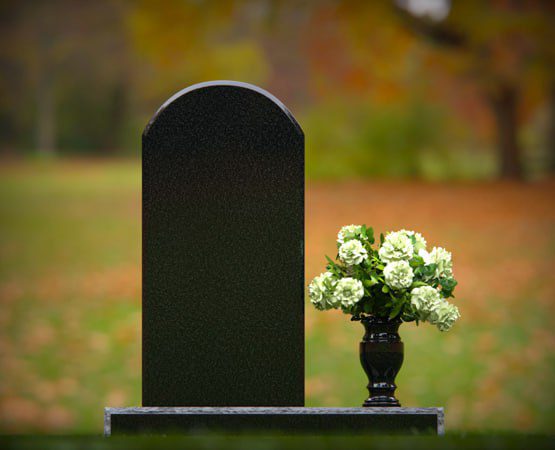
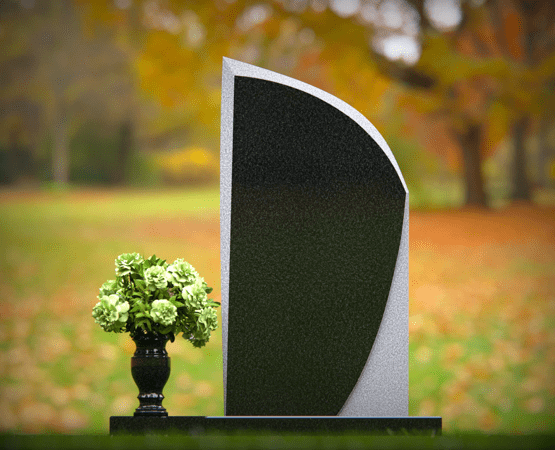
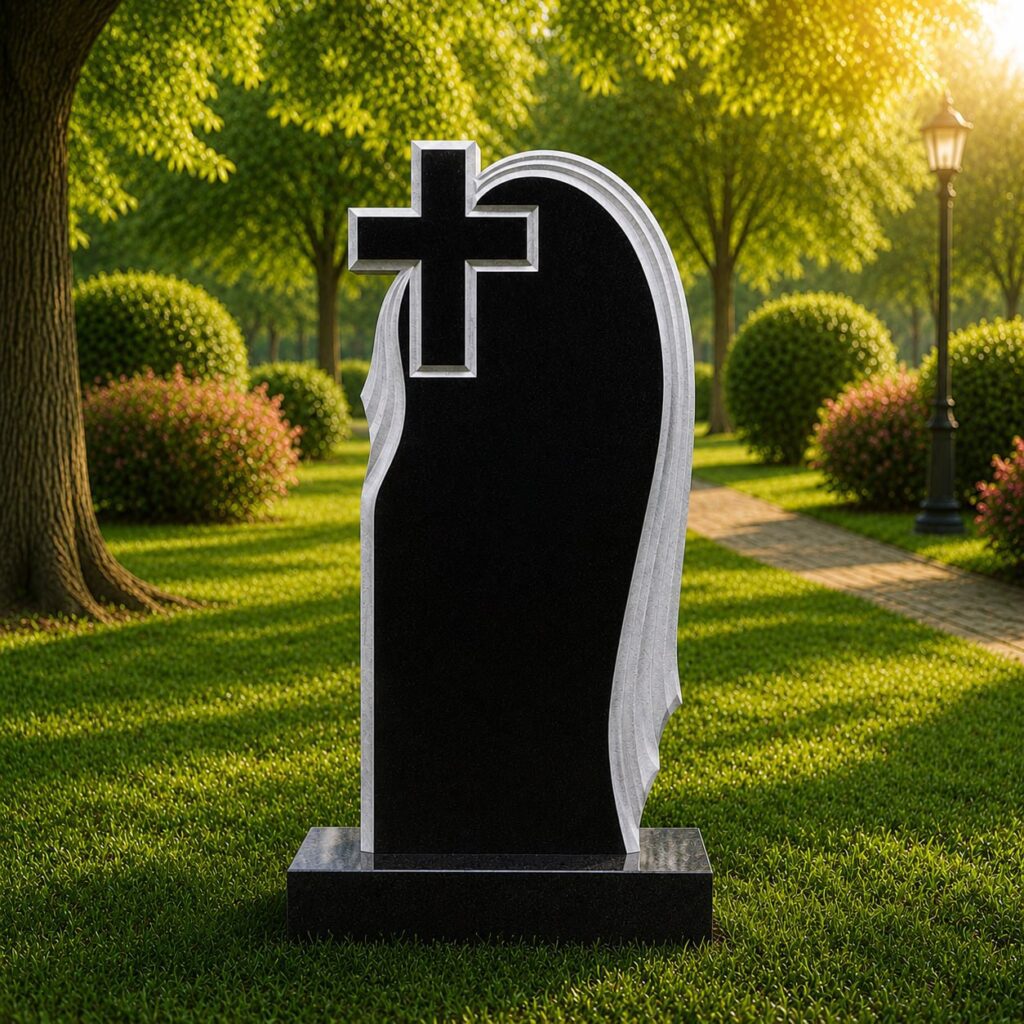
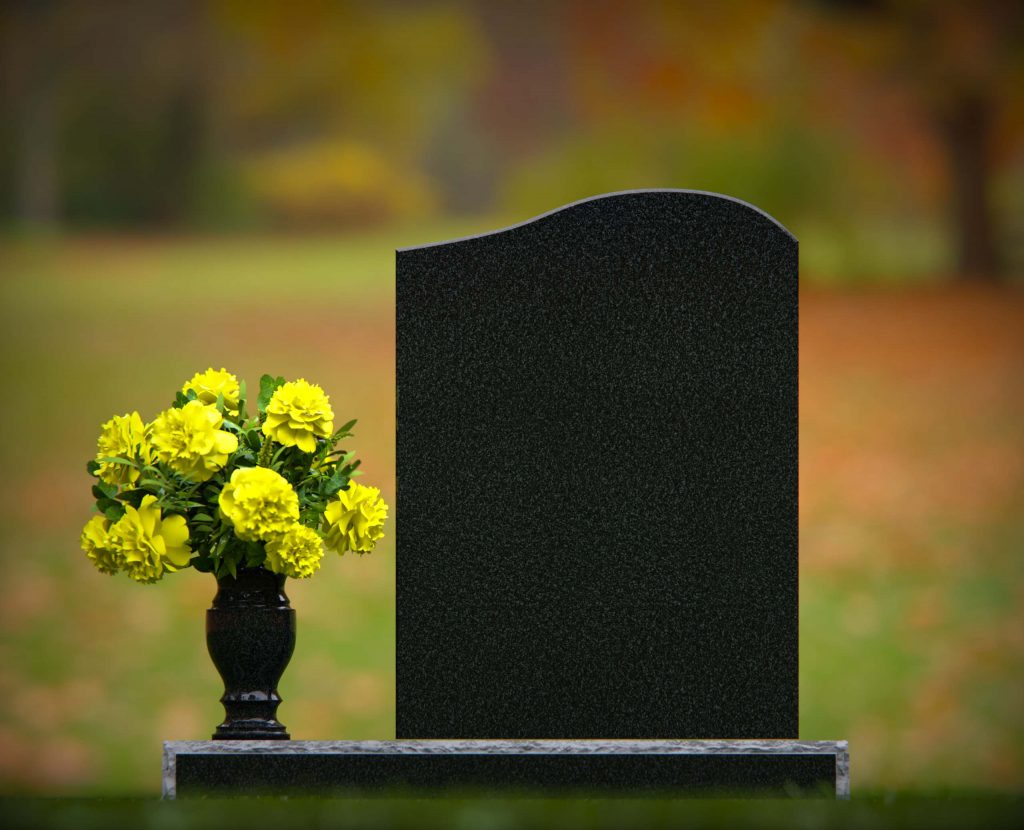
A coin needs a place to rest. The flat top edge of an upright headstone, the surface of a flush granite marker, the ledge of a slant – the design of the stone quietly decides whether visitors can leave anything at all. Families who want their loved one’s grave to receive this kind of remembrance sometimes ask about it without quite knowing how to. A broad, smooth top edge. A bench with a flat arm. A companion stone with room.
That is the part we can help with. Memory Stones keeps granite in stock and ready – flat markers from around $1,600, uprights from $2,240 – and you can configure the shape and the surface right on the product page, turn it in 3D, and use the AR view to stand it at full size in a real cemetery through your phone before anything is cut. So if leaving coins on a headstone is something you imagine for your family, the stone can be chosen with that in mind. We coordinate the cemetery approval and the installation across our showrooms in Sacramento and Los Angeles, California, plus Houston, Tulsa, Edmond, Orlando, Roseland, Galloway, and more, and we ship with full setup to families across Florida, Pennsylvania, New York, Washington, North Carolina, South Carolina, Kansas, Arkansas, and the rest. Veterans receive 30% off with full payment, and police officers and first responders 25% – which feels fitting on a page about a tradition that began with honoring service.
A coin is such a small object. But the next time you pass a grave and see a few resting on the granite, you will know the stone is being spoken to. And that the person below is still, in the truest sense, being visited.

 SUMMER SALE — 35% OFF IN-STOCK PRODUCTS WITH FULL PAYMENT — PROMOTION EXTENDED THROUGH AUGUST 31!
 10% OFF on installment plans
