





3 Person Headstone Designs for Families Who Belong Side by Side

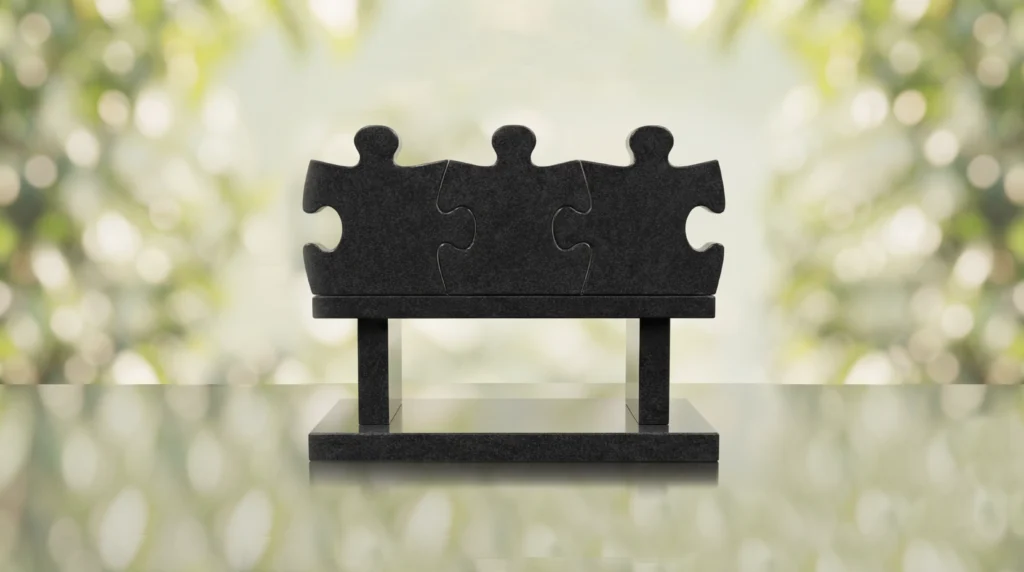
A woman called our Tukwila showroom last spring and opened with a sentence we hear more often than you’d think. “I need one stone for three people, and everyone keeps showing me stones for two.” She wasn’t wrong about the market. Walk through most monument catalogs and you’ll find singles and companions everywhere, while anything built for three feels like an afterthought. It shouldn’t be. Families come in every size, and after years of designing memorials across Washington, Oklahoma, Pennsylvania, and a dozen other states, our team has built more three-name monuments than we could count – for parents and a child, for three siblings, for a husband, wife, and the daughter who cared for them both until the end.
So this is the guide we wish she’d found before calling us. What a 3 person headstone actually is, the shapes it takes, what it costs, and the handful of decisions that matter far more than they first appear.
The Question Behind the Question
When someone asks about a memorial for three, they’re usually holding a harder question underneath. Who goes in the middle. Whether a name can be added years from now. Whether the cemetery will even allow a stone that wide. Sometimes whether it’s strange to put a living person’s name on granite at all – and it isn’t, for the record, families do it every day, birth date engraved, final date left open.
We’ve learned to start there instead of with the catalog. Once a family tells us who the three people are to each other, the design half-solves itself. Parents flanking a child read differently than three brothers in a row. A mother between her two daughters carries its own logic. Layout is relationship made visible, and granite is patient enough to hold whatever arrangement is true.
What a 3 Person Headstone Looks Like in Practice
The most common answer is a wide upright. Where a companion monument for two typically runs 48 inches across, a 3 person headstone usually stretches to 60 or 72 inches on a matching base, giving each name its own breathing room. The face divides into three panels – sometimes literally, with carved columns or vertical lines of polished stone between frosted sections, sometimes just visually, through spacing. A shared surname often crowns the whole piece, with three first names, three sets of dates, and three short inscriptions beneath.
Black granite remains the favorite for these because laser etching lets us place three individual portraits across one face without crowding, but we build them in gray, Bahama Blue, and India Red as well. Add a central emblem – a cross, an open Bible, interlocked hearts, a family crest – and the stone stops being three memorials pushed together and becomes one.
Flat options exist too, and they matter in cemeteries with height restrictions. A triple flat marker, or three individual flats cut from the same granite lot so the color matches forever, solves the problem in lawn-level sections. And for cremation, a single upright with three niches or a pedestal holding three urns keeps everyone genuinely together, not just adjacent.
When a Three Person Headstone Marks Parents and a Child
This is the hardest version, and the most common one. A child lost young, and parents who decide – sometimes immediately, sometimes decades later – that the family will share one stone.
The design conversations here are gentle and specific. Most families place the child in the center. Not always. One father in Enid asked us to put his son on the right, “where he always sat in the truck,” and that stone is exactly right because of it. Imagery tends to bridge the generations: a carved angel above the child’s panel, the parents’ wedding date beneath theirs, a single verse spanning all three names. We etched a monument last year with the family’s porch swing across the bottom, three cushions on it, and nobody who sees it needs the symbolism explained.
If the parents are still living, we engrave the child’s panel fully and pre-cut or reserve the other two, so that decades from now the additions match perfectly in font and depth. Our designers keep every file on record for exactly that reason. It’s a strange kind of comfort, knowing the stone is already whole and simply waiting, but families tell us it is one.
Benches, Ledgers, and Estate Monuments Built for Three
Uprights aren’t the only architecture. A granite bench headstone with three names across the seat back turns the memorial into a place – somewhere to actually sit on a Sunday, which changes how often people visit. We’ve installed these from Orlando to Essington, and the families who choose them almost always say the same thing afterward: the grandchildren stay longer.
Ledger stones, the full-length slabs that cover a plot, can be tripled side by side or designed as one monumental piece over a family plot. And at the top end sits the family estate monument – a central upright carrying the surname and three individual markers at the foot of each grave. That format scales gracefully if the family later grows to four or five, which is worth thinking about honestly before you commit to a design that caps at three.
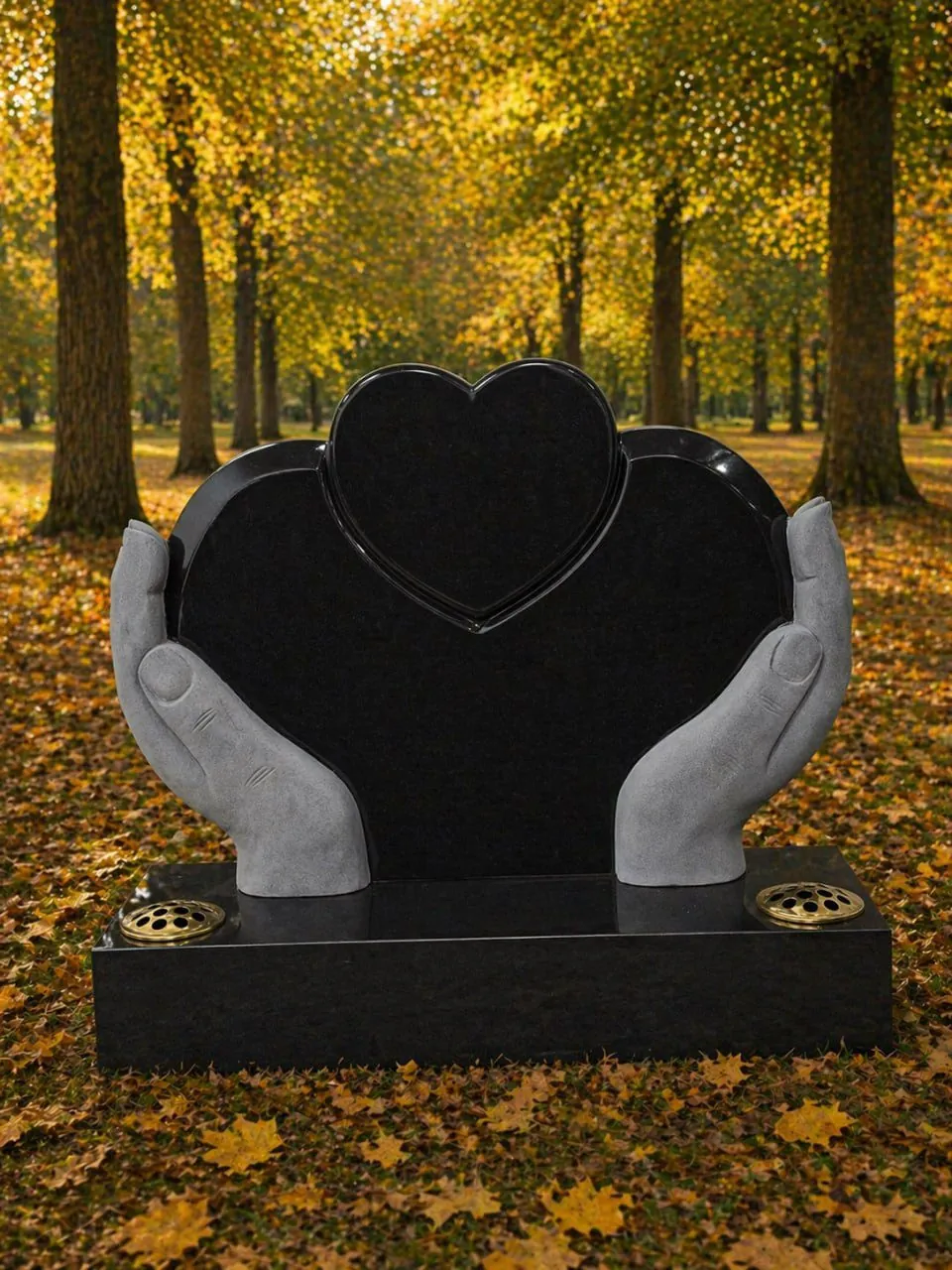
Our shape headstones open another door. A triple heart – three hearts joined in one silhouette – exists in our catalog for precisely this purpose, and it photographs so distinctively that families sometimes choose it before hearing anything about price.
One more format worth naming, because families rarely know to ask for it. A wing monument: a taller central tablet flanked by two lower panels, all cut from one design. The center holds the surname and often a portrait or cross, the wings hold individual names and dates. It gives three people equal standing while still saying, unmistakably, that one story ran through the middle. We build these with matching granite vases on the base ends, and the proportions work on plots that would make a straight 72-inch slab feel heavy. When a family can’t decide between “one big stone” and “three separate ones,” the wing design is usually where the conversation lands.
Adding the Third Name Later
Half the three person headstone projects we handle don’t start as three. They start as a companion stone with room to grow, or a single that a family expands after a second and third loss. Both paths work if someone plans for them.
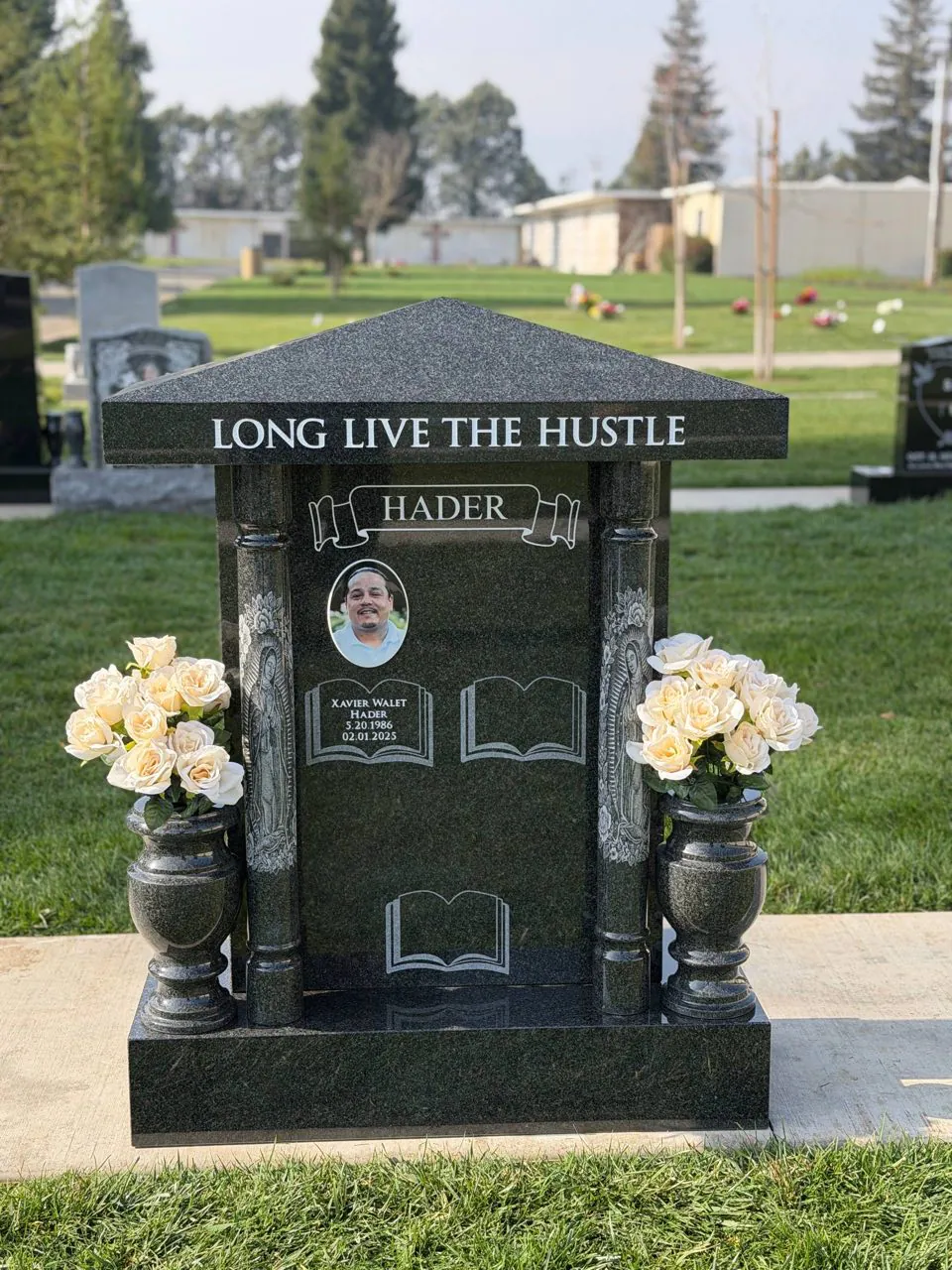
Planning means three things. Buy the width now, even if two-thirds of the face stays blank – granite from the same quarry lot ten years apart will not match, and a visibly mismatched extension hurts every time you see it. Record the font, the cut depth, and the finish, which we do automatically for every order. And confirm the cemetery permits on-site engraving, because some grounds require stones to be lifted and shipped for additions while others allow our teams to letter in place. A ten-minute question now saves a logistical headache during the worst week of someone’s life later.
Check the Cemetery Before You Fall in Love With a Design
We put this bluntly because it’s where families get hurt. A 72-inch monument needs a plot wide enough to hold it, and plot widths vary wildly – some sections sell three adjacent single plots that accommodate a triple stone beautifully, others cap monument width at whatever fits two. Height limits, base requirements, even rules about the number of names permitted per marker all live in cemetery regulation documents most families have never seen.
So we read them for you. Every order at Memory Stones includes a regulations check with your specific cemetery before production, and our local teams in Sacramento, Houston, Tulsa, and the rest already know most of the grounds in their regions by heart. If the cemetery you’ve chosen can’t take the design you love, we’d rather redesign on paper than at the loading dock.
What Three Names Cost and How to See It First
Honest numbers, because vague ones help no one. A triple flat marker arrangement can come together for well under a thousand dollars – individual flats start at $55 in the current sale. Wide upright three person monuments generally run from around $3,500 into the $6,000s depending on granite, size, and artwork, with our storewide 35% discount for full payment already reflected in listed prices. Veterans and first responders receive 35% off as well, and we match competitor quotes within 10% on comparable stones. Financing spreads the rest: 0% in-house up to 12 months, extended plans to 24, and pre-need arrangements – which suit three-person family planning especially well – at 0% up to 36 months. Shipping is free, and the workmanship carries a lifetime warranty.
Before any of that, though, use the configurator. Every product page at memorystones.us lets you type in all three names, arrange the panels, pick the granite, and view the result in 3D – then project it at full size through your phone’s AR preview, standing on the actual plot if you’re at the cemetery. Three names on a screen mockup and three names standing six feet wide in front of you are different experiences. Families change their minds at that moment more than any other, and it costs nothing to have the moment early.
Come Sit With Us
Some decisions want a table, coffee, and someone who has done this a thousand times. Our showrooms are open in Tukwila near Seattle, Essington outside Philadelphia, Roseland in New Jersey, Orlando, Spartanburg in South Carolina, Hesperia and Laguna Woods and Los Angeles and Sacramento in California, Allen and Dickinson and Houston in Texas, Edmond, Tulsa, and Enid across Oklahoma, and Lemont and Plainfield in the Chicago suburbs and Galloway near Columbus, Ohio. Families in New York, North Carolina, Kansas, and Arkansas work with us by phone and email start to finish, and the design quality is identical either way.
Bring photographs. Bring the argument you’re having about who goes in the middle – we’ve refereed that one before, kindly. Bring the cemetery’s paperwork if you have it, and if you don’t, just the cemetery’s name is enough for us to pull the rules ourselves. A stone for three is really a portrait of how a family held together, and getting it right is the whole job.
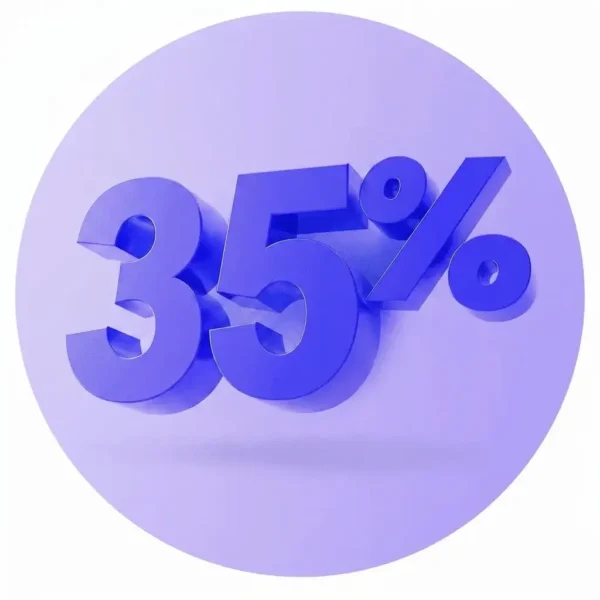
 SUMMER SALE - 35% OFF everything with full payment
 10% OFF on installment plans
