





Exploring the Various Styles of Headstones and Grave Markers

When we lose a loved one, one of the most enduring and profound decisions we must make is how to memorialize them. A headstone or grave marker is more than just a piece of stone or metal; it is a lasting tribute to a life lived, a historical record for future generations, and a focal point for grief, remembrance, and celebration. Choosing the right style can feel overwhelming during a time of mourning, especially given the vast array of options available in today’s memorial industry.
This comprehensive guide explores the various styles of headstones and grave markers, the materials used to craft them, personalization options, and the practical considerations you must keep in mind before making a final decision.
The Evolution of Grave Markers
To understand modern headstones, it is helpful to look at their historical context. In ancient times, people used simple fieldstones or wooden crosses to mark burial sites. As civilizations advanced, so did the artistry of memorials. The Victorian era saw the rise of elaborate marble sculptures, soaring obelisks, and intricate symbolism, turning cemeteries into park-like settings designed for contemplation. However, as the 20th century progressed, the focus shifted toward durability and maintenance. Today, modern cemeteries often have specific guidelines that influence the styles of markers we see, leading to a balance between beautiful personalization and practical longevity.
Primary Memorial Materials
Before selecting a style, one must consider the material, as this fundamentally dictates what styles are possible, how long the monument will last, and how it will interact with the environment.
-
Granite: By far the most popular and practical choice for modern headstones. Granite is incredibly durable, resistant to extreme weather conditions, and rarely degrades over time. It is available in a wide spectrum of colors, including absolute black, traditional gray, vibrant reds, rich blues, and deep greens. Its dense surface allows for highly detailed laser etching and deep engraving.
-
Bronze: Frequently used in conjunction with granite bases, bronze markers are elegant and classic. Bronze naturally oxidizes over time, developing a protective green-brown patina, though modern clear-coats can preserve the original metallic shine. Bronze is the standard for flat lawn markers in many memorial parks.
-
Marble: Renowned for its stunning, luminous beauty and smooth texture, marble was the material of choice for intricate classical statues and Victorian headstones. However, marble is highly susceptible to environmental degradation. Acid rain and harsh weather will eventually erode the details and lettering, making it a less common choice for exterior monuments today.
-
Slate and Sandstone: These materials were historically popular in early American graveyards. While they offer a beautiful, rustic aesthetic, they are porous and prone to cracking, spalling, and moisture damage. They are rarely used for new memorials today.
Common Styles of Headstones and Markers
The style of a headstone determines its visibility, presence, and the amount of space available for engraving. Below are the most prominent styles found in cemeteries today.
1. Upright Headstones
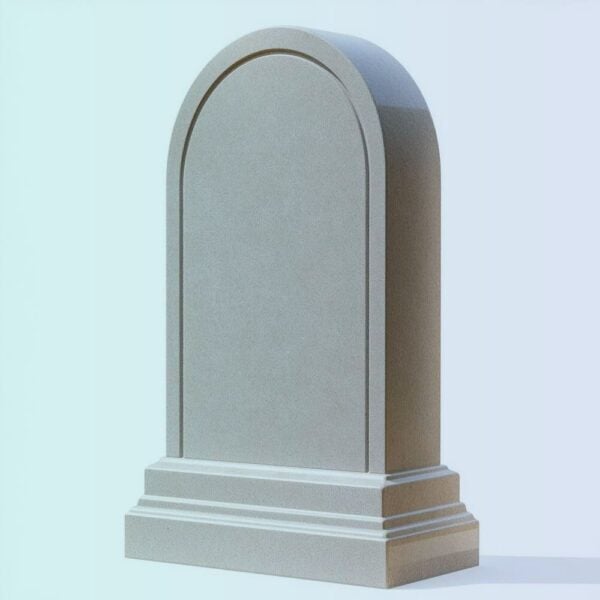
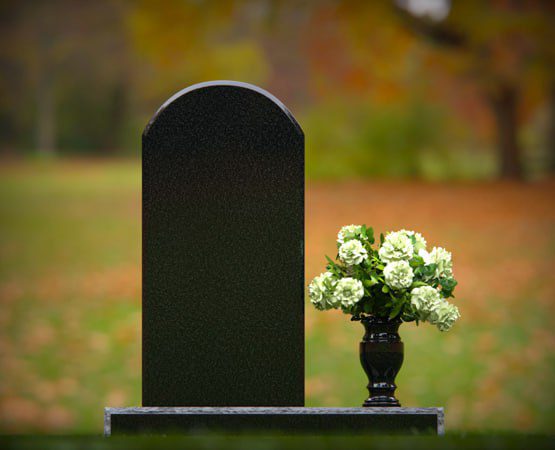
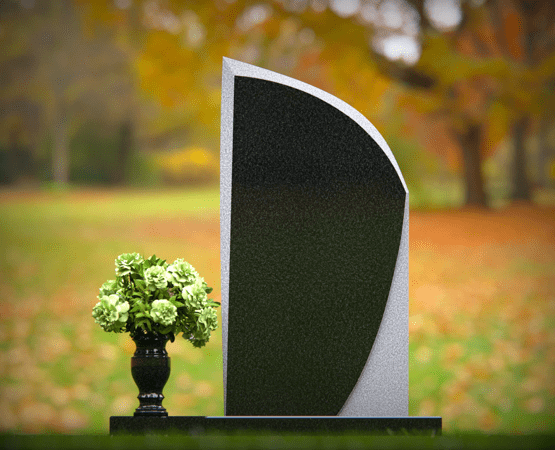
Upright headstones are the most traditional and easily recognizable type of memorial. They typically consist of two distinct pieces: the “die” (the upright tablet that features the engraving) and the “base” (the sturdy foundation the die rests upon).
-
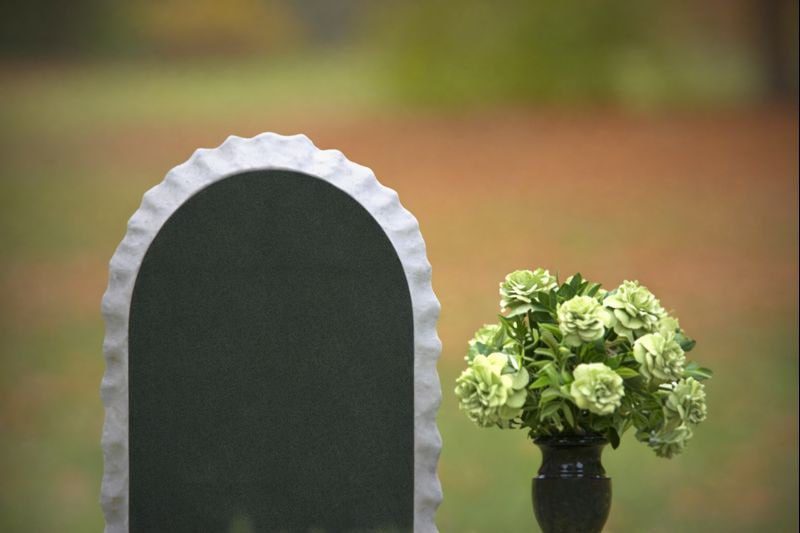
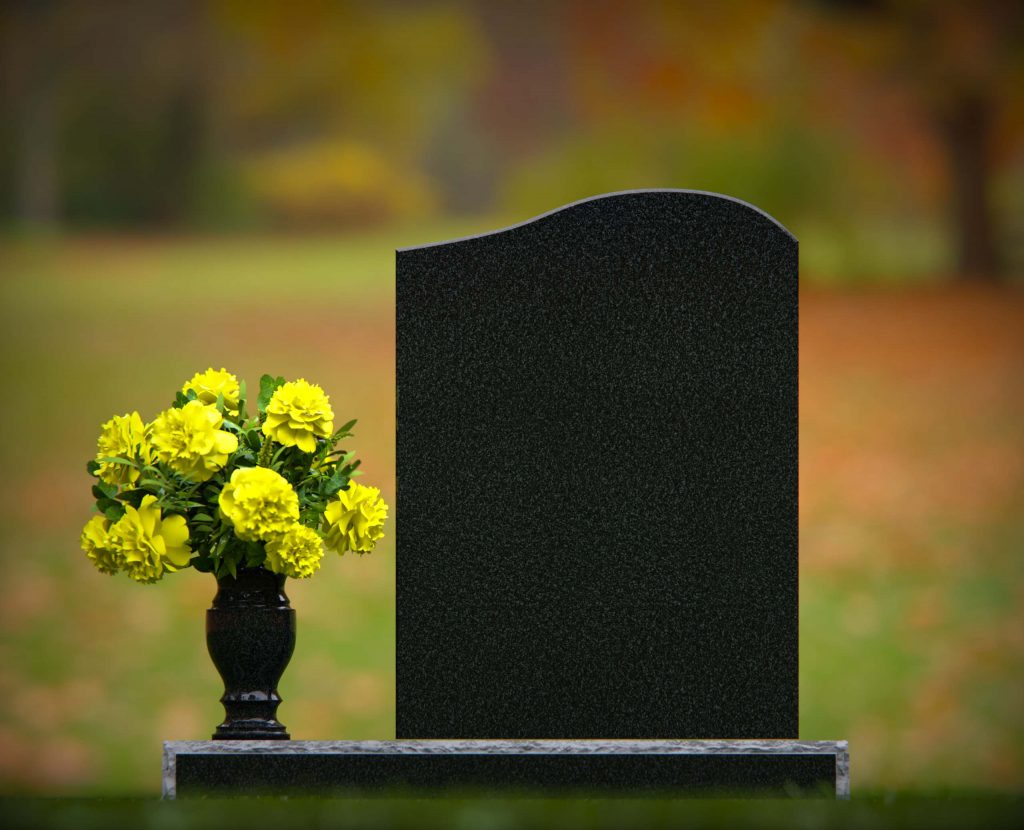
Serpentine Top: Features a gentle, wave-like curve across the top, softening the harsh edges of the stone.
-
Oval or Apex Top: A rounded or pointed top that draws the eye upward, traditionally symbolizing a connection to the heavens.
-
Square/Flat Top: Offers a clean, modern, and sharp aesthetic, maximizing the surface area available for text and artwork.
2. Flat Markers (Flush Markers)
Flat markers are designed to lie completely flush with the grass. Many modern “memorial parks” strictly require flat markers to maintain an unbroken, park-like landscape and to allow groundskeepers to mow directly over the gravesites easily.
-
They are typically made of solid granite or a bronze plaque mounted on a granite base.
-
While they offer an understated elegance, they are prone to being covered by grass clippings, mud, or snow, requiring frequent clearing.
3. Slant Markers
Slant markers offer a middle ground between flat markers and upright headstones. They are typically cut at a steep 45-degree angle.
-
The angled face makes the inscription easily readable from a distance without the towering height of an upright monument.
-
They can be placed directly on a concrete foundation or elevated on a matching granite base.
-
The back is usually left straight, providing a bold, wedgeshaped profile.
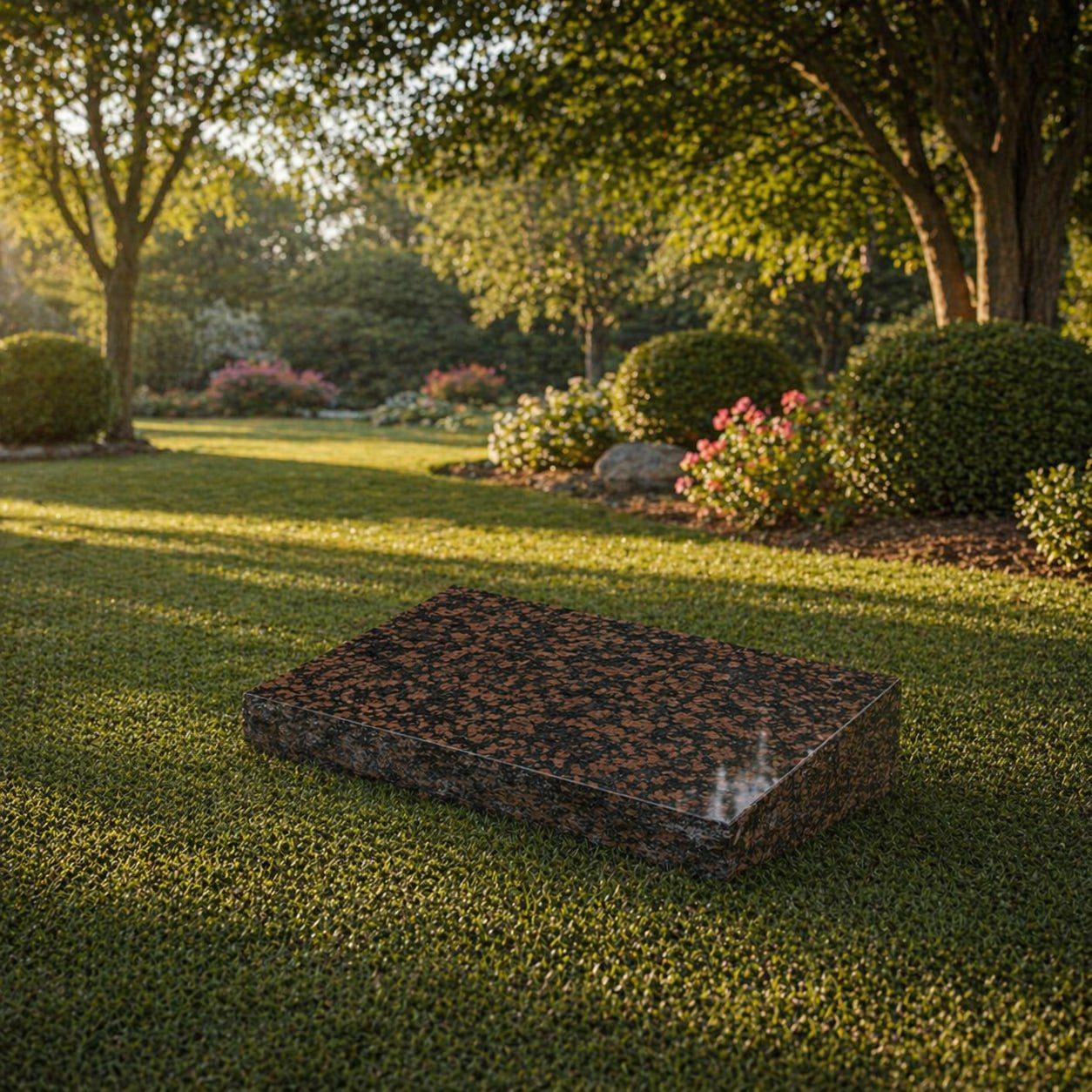
4. Bevel Markers (Pillow Markers)
Bevel markers are similar to flat markers but are slightly raised above the ground. They lie flat but have a slight pitch or slant—usually raising a few inches higher at the back than at the front.
-
This subtle angle helps shed water and debris better than a completely flush marker.
-
It provides a bit more visibility than a flat marker while still adhering to the height restrictions of many strict cemeteries.
5. Ledger Markers
A ledger marker is a large, thick slab of stone that covers the entire length and width of the grave.
-
They provide a massive canvas for elaborate engravings, multiple names (often used for family plots), and extensive artwork.
-
Ledgers can be used alone or combined with an upright headstone positioned at the head of the grave.
Specialty and Architectural Memorials
For those seeking something truly unique, several specialty markers go beyond standard shapes.
-
Obelisks: Tall, four-sided, tapering pillars that end in a pyramid-like shape at the top. Originating in ancient Egypt, they are classic symbols of enduring life and greatness.
-
Memorial Benches: An increasingly popular alternative to traditional headstones. Granite benches provide a functional, peaceful place for visitors to sit, reflect, and rest while clearly displaying the engraved name and epitaph of the deceased.
-
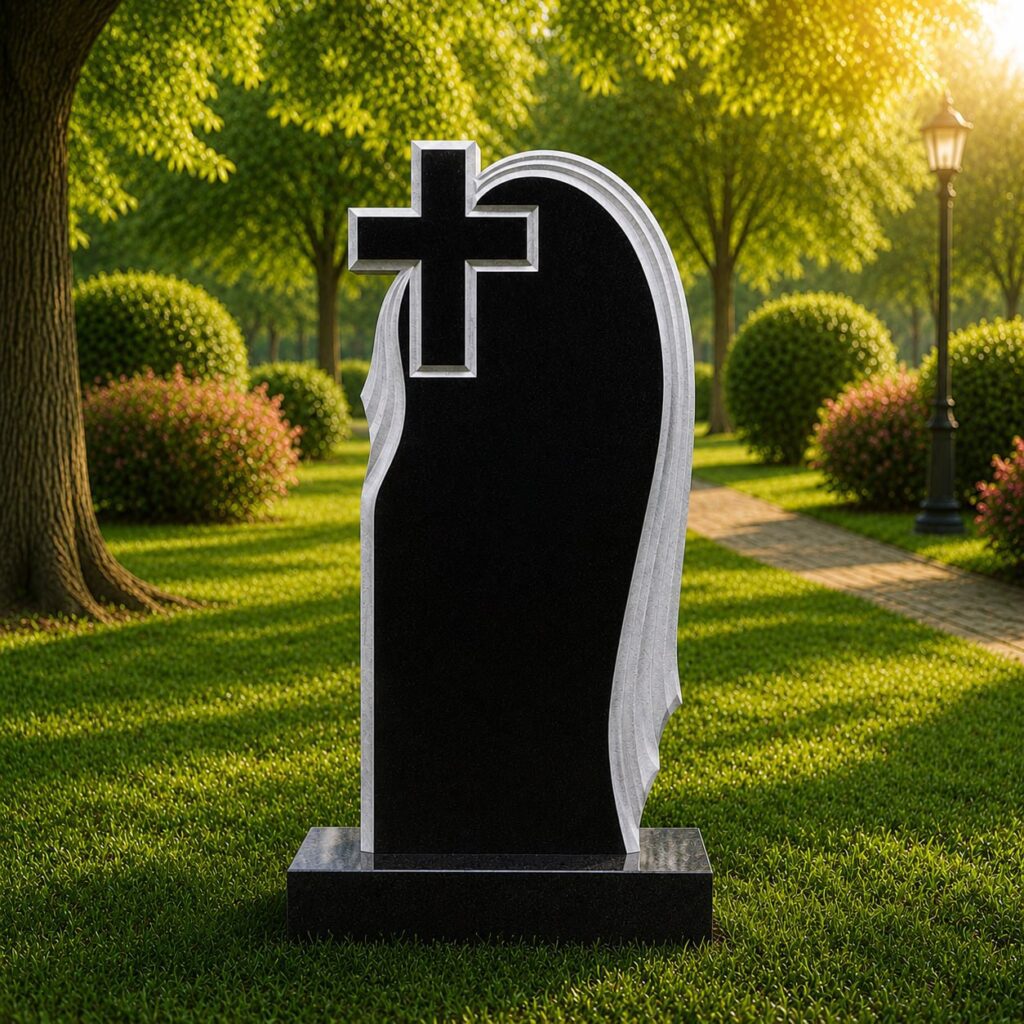
Statuary and Sculptures: Custom-carved figures, most commonly angels, crosses, hearts, or religious figures. These require highly skilled artisans and represent the pinnacle of memorial craftsmanship.
-
Kerbed Memorials: Traditional in older cemeteries, this style involves a stone border (the kerb) outlining the perimeter of the grave, often filled with decorative chippings, soil for planting flowers, or a solid stone slab.
Comparison Table of Marker Styles
| Headstone Style | Visibility | Price Range | Maintenance Level | Best Suited For |
| Upright Monument | Very High | High ($1,500 – $5,000+) | Low | Traditional cemeteries, family plots, large inscriptions. |
| Flat / Flush Marker | Low | Low ($300 – $1,000) | High (needs edging/cleaning) | Memorial parks with strict height regulations. |
| Slant Marker | Medium-High | Medium ($800 – $2,500) | Low | Good visibility at a lower cost than full uprights. |
| Bevel (Pillow) | Medium-Low | Low-Medium ($500 – $1,500) | Medium | Cemeteries allowing slight elevation over grass. |
| Ledger Marker | High (Surface Area) | Very High ($2,500 – $6,000+) | Medium | Covering the full grave, extensive family histories. |
| Memorial Bench | High | High ($2,000 – $5,000+) | Low | Creating a peaceful sitting area for mourning visitors. |
Personalization and Engraving Techniques
The style of the stone is only the canvas; the engraving brings the memorial to life. Modern technology has revolutionized how we personalize headstones.
Engraving Methods
-
Sandblasting: The most common method. A rubber stencil is applied to the stone, and high-pressure sand carves away the exposed areas, leaving deep, readable letters.
-
Laser Etching: Primarily used on absolute black granite. A laser burns away the polished surface, allowing for incredibly detailed, photorealistic images, portraits, and intricate scenery.
-
Hand Carving: A traditional, artisanal method usually reserved for intricate 3D elements like flowers, ivy, or religious icons.
Elements of Personalization
-
Epitaphs: A short, thoughtful phrase, quote, or religious scripture that captures the essence of the person.
-
Porcelain Cameos: A fired ceramic photograph of the deceased permanently affixed to the stone. This provides a full-color face to match the name.
-
Symbolism: Incorporating symbols that reflect the person’s life, such as Masonic emblems, military insignias, praying hands, specific flora (e.g., roses for love, oak leaves for strength), or symbols of their profession and hobbies.
Crucial Cemetery Regulations
The most critical step in exploring headstone styles is one that must be taken before any purchase is made: consulting the cemetery’s rules and regulations.
Cemeteries are privately or municipally owned and maintain strict covenants regarding what can and cannot be placed on their grounds. These rules are designed to maintain the aesthetic harmony of the park and ensure groundskeeping equipment can maneuver safely. Common regulations include:
-
Size Restrictions: Minimum and maximum dimensions for height, width, and thickness.
-
Style Mandates: Many newer sections only allow flat bronze markers, completely forbidding upright headstones.
-
Material Rules: Some historic cemeteries may only allow certain colors of granite or forbid non-traditional materials.
-
Foundation Fees: Cemeteries usually require their own staff to pour the concrete foundation and install the stone, which incurs an additional fee separate from the cost of the monument itself.
Conclusion
Choosing a headstone is a profound act of love and remembrance. By understanding the distinct styles—from the towering presence of an upright granite monument to the understated dignity of a flat bronze marker—you can select a memorial that perfectly encapsulates the legacy of your loved one. Whether you opt for a simple bevel marker or an elaborate sculptured ledger, the final result should be a beautiful, enduring place of peace that honors a unique life for generations to come. Take your time, consult with expert monument builders, verify all cemetery regulations, and trust your instincts to create a fitting and permanent tribute.






 SUMMER SALE — 35% OFF IN-STOCK PRODUCTS WITH FULL PAYMENT — PROMOTION EXTENDED THROUGH AUGUST 31!
 10% OFF on installment plans
