





Headstone Epitaphs and How to Write One Worth Carving in Granite

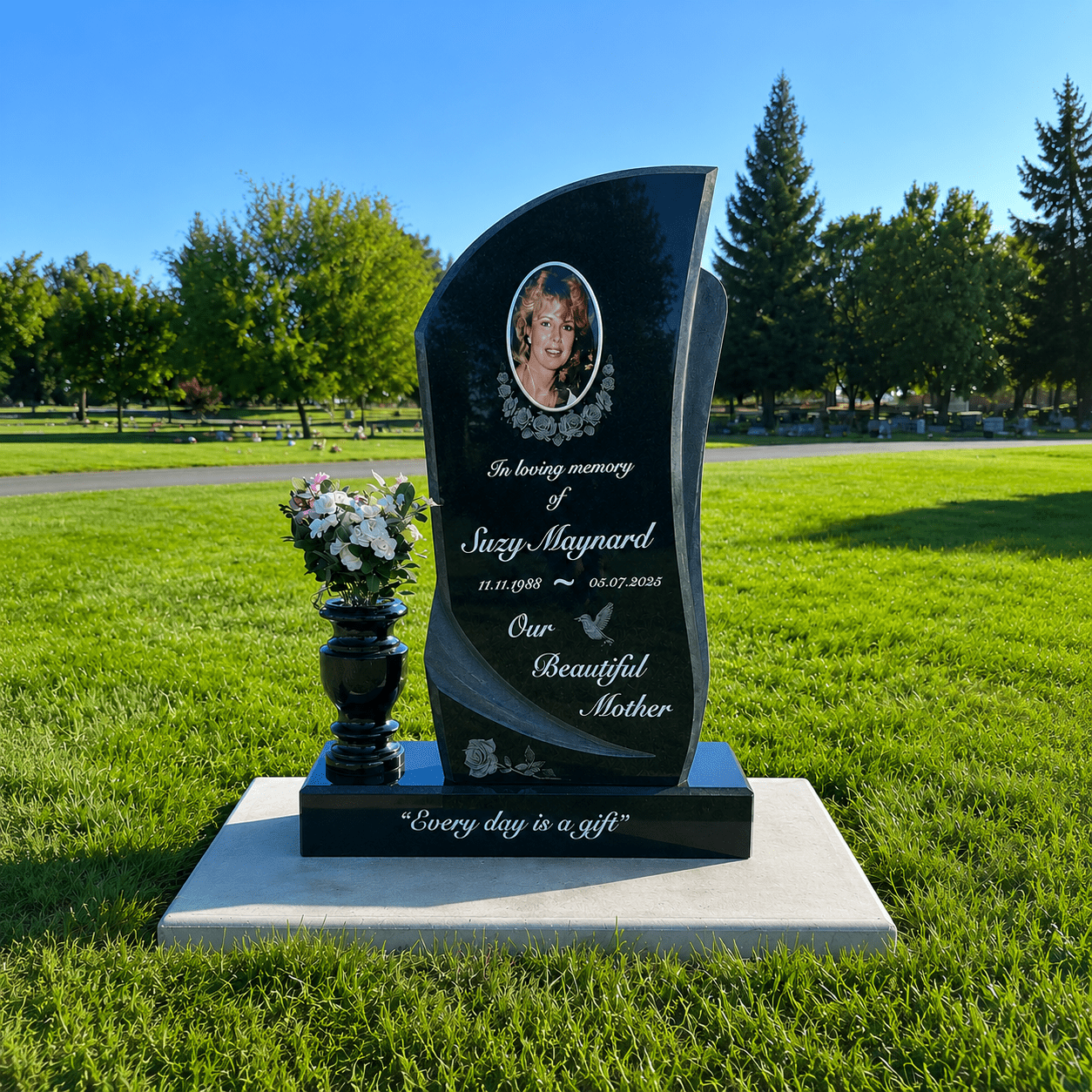
An epitaph is the shortest biography ever attempted. Four words, maybe ten, asked to stand in for eighty years – and then asked to keep standing for two hundred more. No other writing assignment on earth has that ratio of brevity to permanence, which is probably why families freeze when the design form reaches the line marked inscription. The name was easy. The dates wrote themselves. Then comes the blank space, and the pen stops.
This guide exists for that stopped pen. Memory Stones engraves headstone epitaphs every working day across California, Texas, Oklahoma, and a dozen other states, and our designers have learned what makes a line carve well, read well, and hold up across generations of visitors – including when the family wants the line to be funny, which is its own delicate art and gets full treatment below. There are no forms to fill out here. Just the craft, some workable samples, a little history, and a method for finding the words when they won’t come on their own.
Epitaphs for Headstones in Seven Words or Fewer
Brevity isn’t a limitation of the form. It is the form. The strongest epitaphs for headstones tend to land at three to seven words, and the reason is physical before it’s poetic: a short line engraves large, reads from the path, and leaves the stone’s composition room to breathe. “Beloved wife, mother, and friend” has anchored a million monuments because it works, not because families lacked imagination.
The craft move worth stealing from every good short epitaph: pick one truth, not three. “She made everything grow” says gardener, mother, and warmth in four words. “He never met a stranger” carries an entire personality. “Home at last” holds a whole theology. When a family brings us a paragraph, the designer’s first question is always the same – which sentence would they have actually said out loud? That sentence is usually the epitaph, and the rest was the family working up the courage to find it.
Longer inscriptions have their place. A verse runs two to four lines on an upright, and monument bases take full quotations gracefully. But the line under the name, the one strangers will read for a century, wants to be short enough to memorize by accident.
The Four Voices an Epitaph Can Speak In
Here’s a piece of structure most families have never been offered, and it unlocks the writing faster than anything else we know. Every epitaph speaks in one of four voices, and choosing the voice first makes the words easier to find.
The first voice belongs to the person themselves, written as if they’re speaking: “I told you I was sick” lives in this voice, and so does “Gone fishing.” It suits people with strong personalities and reads warmest on stones for those who did their own talking in life. The second voice addresses the visitor directly – the oldest tradition in the form, running back centuries: lines that say pause, remember, live well while you can. The third voice is the family speaking about their person: “Beloved father,” “Our hearts forever,” the devotional register most American stones use. And the fourth is the borrowed voice – scripture, a poem, a song line the person loved, a phrase from their own letters.
Try the epitaph you’re circling in each voice. Families are regularly startled to find that a line that felt flat in the third voice comes alive in the first, and the exercise takes five minutes at a kitchen table.
Sample Epitaphs for Headstones by Relationship
Working examples, because staring at possibilities beats staring at blankness. These sample epitaphs for headstones come from the patterns in our own order files, generalized so no family’s stone is quoted. For a mother: She made this house a home. Love was her language. Everything good began with her. For a father: He built more than houses. Strong hands, gentle heart. His word was enough. For grandparents on a companion stone: Together in all things. Their table was always set. Love wrote every chapter.
For a child, where words nearly fail: Our brightest star. Forever our baby. So small, so loved, so missed. For a veteran: Duty done, rest earned. He answered when called. For the friend everyone had: The room was warmer with him in it. She showed up. Every time. And for the person who planned their own stone – a growing share of what we engrave, with pre-need arrangements running 36 months at 0% – the first voice opens up entirely: Back to the garden. I loved this life. See you at the lake.
None of these are templates to copy so much as doors to walk through. Change a word and the line becomes yours. That’s allowed. That’s the point.
Examples of Epitaphs on Headstones From History
The form has a deep past worth raiding for courage. Examples of epitaphs on headstones from old American burial grounds show how long families have been solving this same blank line. Colonial stones across Pennsylvania and New England carried the memento mori tradition – inscriptions reminding the passing visitor that they, too, were mortal, often phrased as the dead addressing the living about the shortness of the road. Nineteenth-century stones softened into sleep imagery: rest, slumber, the long peaceful night, a register you can still read on weathered marble from Galloway to Essington.
Writers and public figures left famous ones. Shakespeare’s grave carries a rhymed warning against disturbing his bones. Benjamin Franklin drafted a printer’s epitaph for himself comparing his body to a worn book awaiting a better edition – he wrote it young, decades early, which might be the best endorsement of pre-planning ever recorded. Emily Dickinson’s stone says only that she was called back. And in the folk tradition, carvers and families slipped wit onto stones for centuries: the hypochondriac vindicated at last, the innkeeper whose stone doubled as an advertisement, the cowboy remembered for a life with his boots on. We paraphrase these rather than quote, since old carvings come down in a dozen versions anyway, and the lesson survives the paraphrase: people have been personal, tender, and occasionally hilarious on granite for as long as granite has taken letters.
Funny Headstone Epitaphs and Whether Your Family Should Choose One
Now the question families whisper like a confession: can it be funny? Yes. Should yours be? That depends on exactly one thing, and it isn’t the cemetery or the neighbors. It’s whether humor was the person’s native language. Funny headstone epitaphs work when the laugh belongs to the person under the stone – when everyone who knew them hears their voice in the line. They fail when the humor belongs to the family’s nervousness instead, a joke placed over silence because grief felt too heavy to carve directly.
The test our designers offer, gently: would the person have chosen this line themselves? A man who signed every birthday card with the same terrible pun has earned that pun in granite, and his grandchildren will stand at the stone in forty years and laugh, which is a form of visiting most monuments never achieve. A joke picked by committee two weeks after a funeral almost always reads differently by the first anniversary. When the answer is yes, though – genuinely, unmistakably yes – a humorous line becomes the most honest inscription possible, and we cut it with the same care as any verse.
Humorous Headstone Epitaphs That Aged Well
What separates the humor that lasts from the humor that curdles? Having engraved plenty and read cemeteries full more, the pattern is clear. Humorous headstone epitaphs age well when the joke is on the deceased, by their own consent: I told you I was sick, the classic of the entire genre, works because the speaker is laughing at themselves from the far side. Gone to the big garage in the sky works for the mechanic who would have said it. Lines built on the person’s own catchphrases – the thing Dad actually said every Sunday – hold up forever because they’re memory first and joke second.
What ages poorly: humor at someone else’s expense, topical references that need a footnote by 2040, and anything the person’s most sensitive grandchild couldn’t read aloud at twelve. The durable funny line is really a personality preserved, and the funny headstones epitaphs people photograph and share online – the ones that made you smile in a cemetery, which is a small miracle – are almost all in that first category. Self-deprecating, in-voice, and warm underneath. The warmth is what carries it across decades. The joke is just the vehicle.

Funny Epitaphs for Headstones and the Cemetery Approval Question
One practical gate stands between a great line and the granite. Funny epitaphs for headstones pass through the same cemetery review as any inscription, and standards vary more here than anywhere else in memorial rules. Most grounds we work with across Texas, Florida, Illinois, and Washington approve anything short of profanity without a second look. Some religious cemeteries review all inscriptions for tone. A few conservative grounds have declined lines that surprised everyone, and a few famously permissive ones have approved lines that surprised us.
So we check first, every time – inscription approval is part of the same regulations verification we run on size and finish before production, and it costs the family nothing but a day. The humorous epitaphs headstones carry in your specific cemetery are the best predictor of what yours will allow; walk the newer sections and read. If a chosen line gets declined, the fallback that has never failed: the approved inscription goes on the face, and the personality goes into everything else – the etched fishing boat, the carved dominoes, the QR code linking to the eulogy where the jokes live uncensored.
Writing Yours Without Rushing It
The method, condensed from years of kitchen tables and showroom desks. Gather the raw material first: things the person actually said, lines from their letters and cards, the phrase everyone repeats when telling stories about them. Say the candidates out loud – epitaphs are heard in the head, and lines that read fine often speak wrong. Sleep on the finalist. Then put it on the stone before you commit: the configurator on every product page at memorystones.us renders your exact line, in your chosen font, on your granite, in 3D – and the AR preview stands the finished monument in front of you at true scale, where a seven-word line either sings or doesn’t. It’s the closest thing to time travel the decision offers.
Standard inscription is included in our monument pricing – flats from $55 in the current sale, the Classic Arch upright around $2,330 after the storewide 35% full-payment discount, with 35% for veterans and first responders, financing at 0% to 12 months and plans to 24, free shipping, and a lifetime warranty behind the cutting. The free design proof carries two revisions, and epitaphs are the thing families revise most, which is exactly what the revisions are for. Take the time. The line you’re looking for usually already exists – somebody in the family has been saying it for years without knowing what it was for.
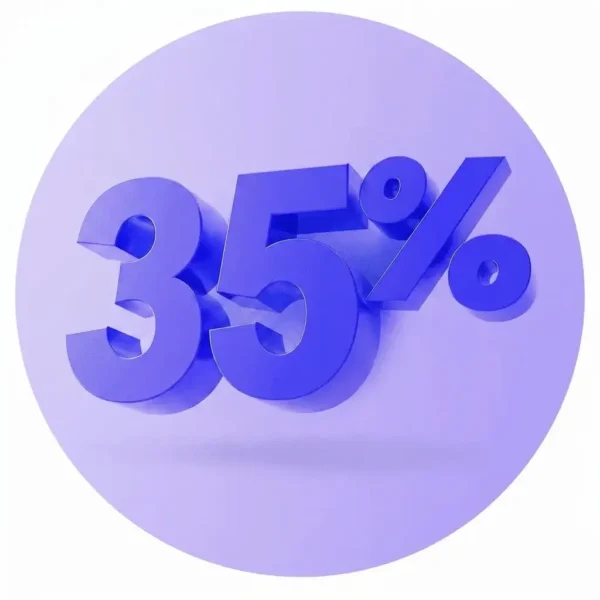
 SUMMER SALE - 35% OFF everything with full payment
 10% OFF on installment plans
