





QR Code for Headstones Explained by People Who Install Them

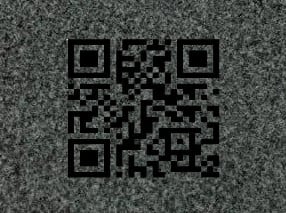
Stand in almost any cemetery long enough and you’ll see it now. A visitor stops at a grave, pulls out a phone, holds it over a small square etched into the corner of the granite, and suddenly they’re watching a wedding video from 1974. The first time it happens near you it feels like science fiction. The tenth time it just feels like memory, working the way memory wants to work – in moving pictures and voices, not only in carved dates.
A QR code for headstones is a simple idea carrying a lot of weight. One small scannable square connects a physical monument to an online memorial page: photo albums, video, a written life story, an audio recording of the person laughing, a family tree, a guest book where visitors leave messages years later. Memory Stones has been adding these to monuments across California, Texas, Ohio, and beyond for several years now, and this article covers what we’ve learned – the technology, the materials, the honest limitations, and whether it makes sense for your family at all. Because it doesn’t for everyone, and we’d rather say that plainly than sell you a sticker.
How a Headstone QR Code Actually Works
There’s no electronics involved, which surprises people. A headstone QR code is just a pattern – the same technology on a restaurant menu – that any phone camera reads and converts into a web address. The code itself stores nothing. All the photos, videos, and stories live on a webpage the code points to, which is both the system’s strength and its weak spot.
Strength, because the content can grow forever. A grandchild born twenty years after the funeral can add their own tribute. The page can hold an hour of video, hundreds of photographs, a scanned handwriting sample, military service records – things granite could never carry, no matter how large the stone.
Weak spot, because a code pointing at a dead link is just decoration. If the memorial page is hosted by a startup that folds in five years, the square on the stone goes silent. So the hosting question matters more than the code itself, and we walk every family through it: who controls the page, who pays for it, what happens when the person managing it passes on themselves. The families who think that through once, at the start, never have a problem. A QR code headstone done carelessly is a broken promise waiting on a timer.
Putting a QR Code on Headstone Granite the Right Way
There are two honest ways to get a QR code on headstone stone, and one shortcut we refuse to use.
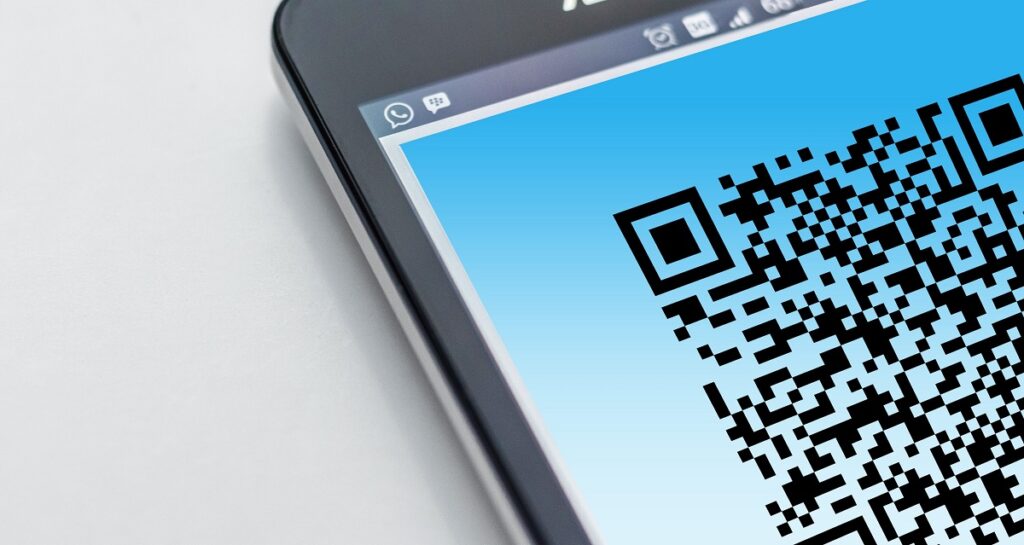
The first method is direct laser engraving into polished black granite. The code becomes part of the monument itself – it cannot fall off, cannot be pried loose, and weathers exactly as slowly as the name beside it. The contrast between frosted etching and mirror polish is what a phone camera reads, so this works brilliantly on black and very dark stones and poorly on light gray or red granite, where contrast drops below what scanners need.
The second is a mounted plaque – anodized aluminum, stainless steel, or fired porcelain – attached with industrial adhesive and mechanical anchoring into a recessed pocket we cut so the plaque sits flush. This is the answer for gray and colored granites, for adding a code to an existing monument without transporting it, and for families who want the option of replacing the plaque someday if technology changes. A porcelain code fired like a ceramic photo will outlast the adhesive holding most cheap alternatives.
The shortcut is the vinyl sticker, and you’ll find them online for twenty dollars. In Sacramento sun or a Chicago winter, a sticker has the lifespan of a parking permit. We’ve been asked to remove enough curled, faded ones from monuments in Lemont and Galloway to consider the matter settled.
What Families Put Behind a QR Code for Headstone Visitors
The technical side takes a paragraph. The human side is where the decisions live, because a memorial page is really an editing job – a whole life, curated.
The most common build we see: a written biography of a few hundred words, thirty to sixty photographs arranged by decade, and one centerpiece headstone QR code video – often the funeral slideshow, sometimes something better. A Dickinson family used footage of their father narrating his own tractor restoration, uploaded exactly as he filmed it, mistakes and all. Visitors stand at his grave and hear him explain a carburetor. That’s the medium at its best.
Audio matters more than families expect. A voicemail saved from years ago. A grandmother singing in Ukrainian at a kitchen table. Recipes appear constantly – the actual card, photographed, stains included. Veterans’ pages often carry unit histories and scanned discharge papers, and we’ve built pages in Spanish, Vietnamese, and Russian for families whose visiting relatives read little English, which turns the small square into a translator of sorts.
One caution from experience. Set the page’s tone before opening a public guest book. Most entries are beautiful. Moderation settings exist for the rest, and we help families configure them.
QR Codes for Headstones and the Question of Longevity
Here’s the conversation we have at the showroom table, honestly, every time. Granite endures for centuries. The internet is not famous for that. So do QR codes for headstones make sense on an object designed to outlive every website currently in existence?
Our answer has three parts. First, the code format itself is an open international standard, not a company’s product – phones in 2050 will almost certainly still read a pattern this universal, the way machines still read barcodes from the 1970s. Second, the link should be owned, not rented: a family-controlled domain or a well-established memorial platform with prepaid permanent hosting, never a free service that can vanish with its parent company. Third, the physical code should be replaceable or re-pointable. We set ours up with redirect links, meaning the address engraved in the stone never changes even if the content moves hosts three times over the decades. That single decision solves most of the doom scenarios.
And if the worst happens and a page someday goes dark? The monument still works. The name, the dates, the portrait, the verse – everything essential remains carved where it always was. The code was always an addition, never the foundation. That’s the design philosophy, and it’s why we put the traditional engraving first in every consultation.
Worth adding, since people ask: pre-need families are adopting this faster than anyone. Someone planning their own monument on a 36-month arrangement will often build the memorial page themselves – their photos, their chosen music, their own recorded message. A QR code for headstones ordered that way carries something no family could assemble afterward, because the editor was the subject. One gentleman in Laguna Woods updates his page every year on his birthday. He calls it his rough draft. His stone is already cut, the corner already reserved, and the redirect already waiting.
Headstone QR Codes Across Different Cemeteries and Traditions
Not every cemetery welcomes the technology yet, and the map is uneven. Most grounds we work with across Texas, Oklahoma, Florida, and Washington treat a flush-mounted or engraved code like any other design element. Some historic and religious cemeteries restrict them, usually under rules written long before smartphones that simply never anticipated the question. A few Catholic and Jewish grounds have specific guidance; some national and veterans cemeteries control government-issued markers tightly enough that codes go on a separate private element instead.
We check, order by order, the same way we verify size and finish rules – it’s part of the standard regulations review before anything is produced. Families in New York, Pennsylvania, and New Jersey ask about this most, since older Northeastern cemeteries carry the thickest rulebooks, and the usual outcome is approval with placement conditions: lower corner, flush mount, modest size. Culturally, adoption is wide. We’ve placed codes on Asian style monuments linking to pages honoring ancestors in two languages, on Orthodox stones linking to panikhida recordings, and on a rancher’s slant marker in Enid that plays, of all things, a cattle auction he won in 1989. Tradition and technology argue less than people assume.
QR Codes on Headstones Compared With What Granite Already Does
A fair question deserves fair handling: are QR codes on headstones necessary at all, or a gimmick? Our position, after installing plenty, is that they solve exactly one problem – and it’s a real one. A monument speaks to strangers in decades-long sentences: name, span, a verse, an image. It cannot tell a stranger what the laugh sounded like. The code can.
But it replaces nothing. A laser-etched portrait needs no battery and no hosting plan. A carved verse reads at a glance in any weather, to any visitor, forever. So the pairing we recommend runs traditional-first: full engraving as if no code existed, then the code as a doorway for whoever wants to walk through it. Priced that way, it’s a modest add-on rather than a system to depend on – typically far less than families expect, and quoted flat alongside the monument. What people search for as qr headstones is really just this: a normal granite memorial with one small door built into the corner.
Seeing It on the Stone Before You Decide
Every monument on memorystones.us can be configured directly on its product page – names, fonts, granite color, artwork – rendered in 3D and then projected at true scale through AR preview, so you can see exactly where a code would sit in the composition and whether it crowds anything. It usually doesn’t. A two-inch square in a lower corner disappears into the design until someone needs it.
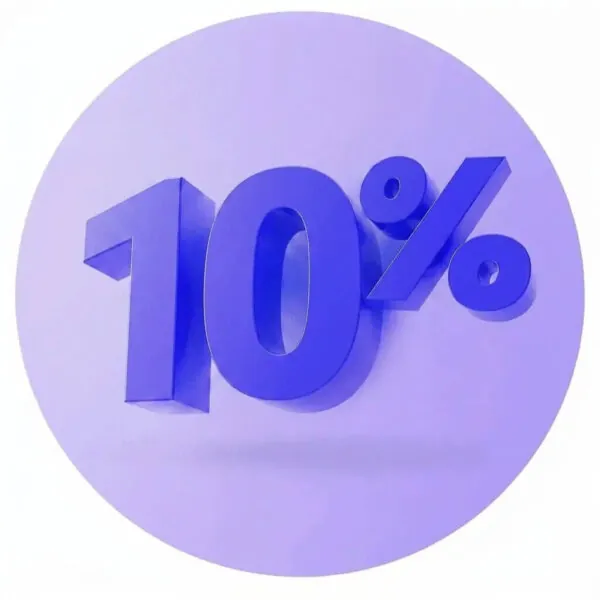
The commercial details stay simple. Storewide, full payment carries a 35% discount right now, veterans and first responders receive 35% off, financing runs 0% in-house up to 12 months with extended plans to 24 and pre-need arrangements to 36 months interest-free, shipping is free, the workmanship is under lifetime warranty, and we match competitor quotes within 10%. Showrooms operate in Sacramento, Los Angeles, Laguna Woods, and Hesperia in California, Houston, Allen, and Dickinson in Texas, Tulsa, Edmond, and Enid in Oklahoma, Plainfield and Lemont in Illinois, Galloway in Ohio, Essington in Pennsylvania, Tukwila in Washington, Roseland in New Jersey, Orlando, and Spartanburg in South Carolina – and every showroom keeps a working demo stone you can scan yourself, which answers more questions in ten seconds than this whole article.
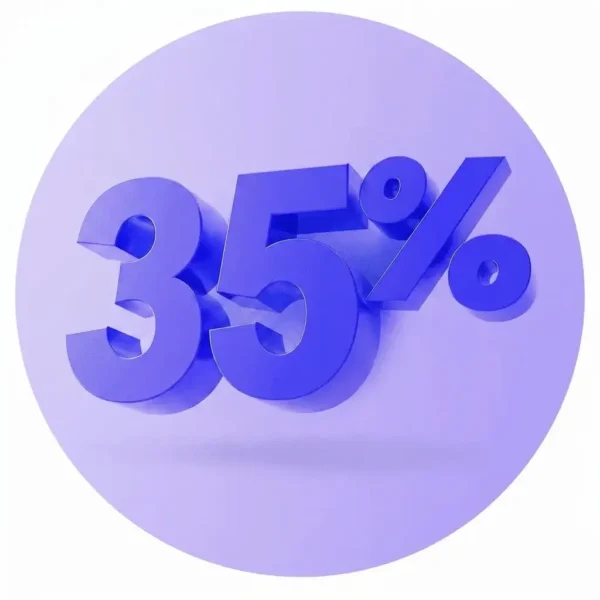

 SUMMER SALE - 35% OFF everything with full payment
 10% OFF on installment plans
