





How to Pick the Best Dimensions and Design for a Headstone

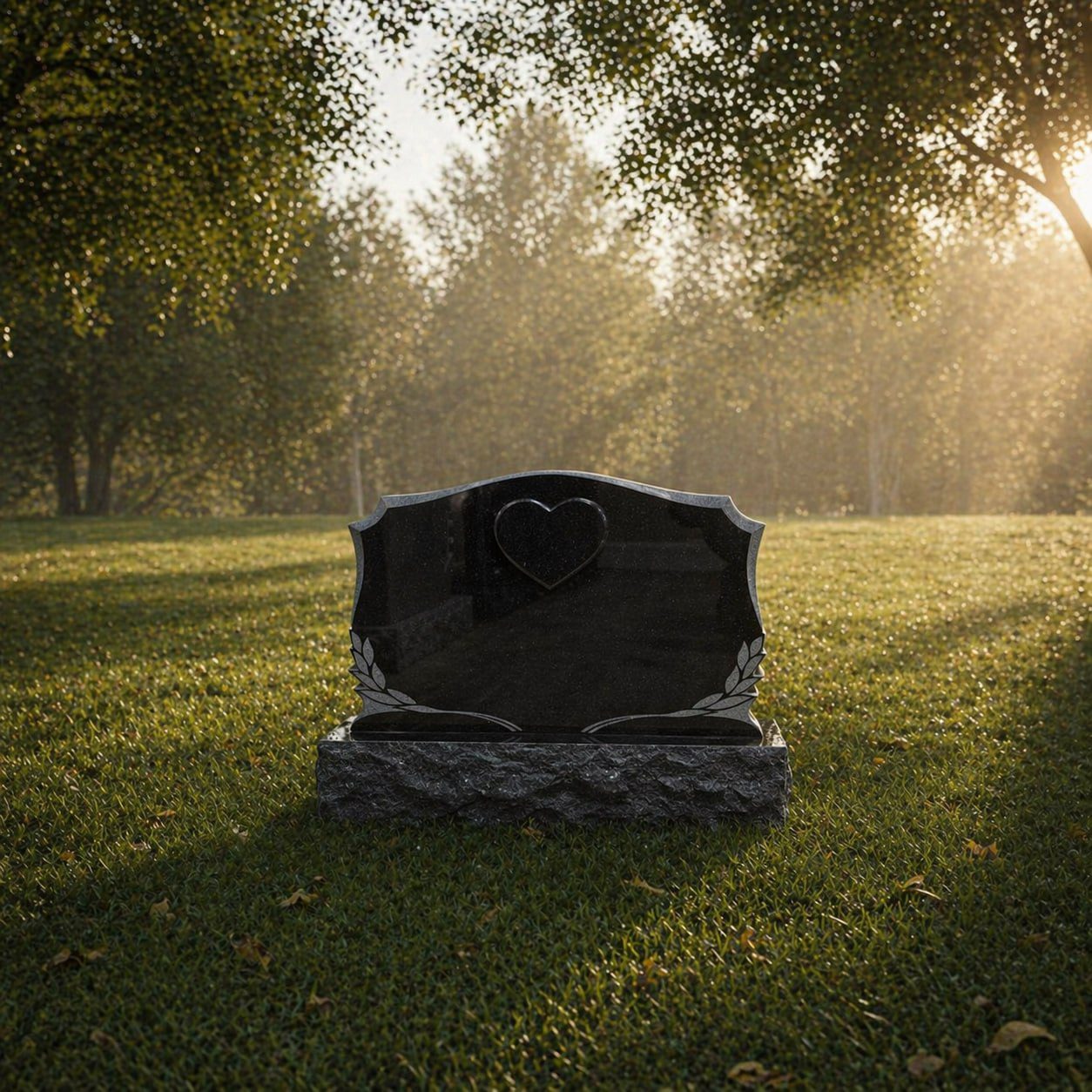
Selecting a headstone is a profound and lasting decision. It is a physical tribute that will stand for generations, preserving the memory and legacy of a loved one. When it comes to crafting a permanent memorial, granite remains the absolute standard. Its unparalleled durability, natural beauty, and adaptability to intricate designs make it the ideal medium for any monument.
However, deciding on the exact dimensions and aesthetic design requires careful consideration of several factors, from the specific layout of the cemetery to the personal narrative you wish to convey. This comprehensive guide will walk you through the essential steps to choose the best dimensions and design for a custom granite headstone.
1. Start with Cemetery Regulations and Plot Guidelines
Before visualizing the design or selecting the exact dimensions of a granite headstone, the very first step must always be consulting the cemetery’s bylaws. Every cemetery has specific regulations that govern the size, style, and sometimes even the finish of the monuments placed on their grounds.
Cemeteries enforce these rules to maintain a cohesive aesthetic across the landscape and to ensure that ground maintenance equipment, such as lawnmowers and trimmers, can navigate the grounds without damaging the markers.
-
Size Restrictions: Cemeteries will dictate the minimum and maximum dimensions (length, width, and height) allowed for specific plots.
-
Style Limitations: Some memorial parks, often called “lawn cemeteries,” only permit flat granite markers that sit flush with the grass. Others may have designated sections for upright monuments.
-
Base and Foundation Rules: Upright and slant granite markers require a solid foundation. The cemetery will specify how wide the base must be in relation to the main die (the upright portion of the headstone).
-
Edge and Finish Rules: Certain grounds require a specific edge finish, such as a sawn or polished edge, to protect the structural integrity of the stone during landscaping.
Always request a written copy of the cemetery’s memorial guidelines before making any design decisions.
2. Choosing the Right Dimensions for Granite Headstones
The dimensions of a headstone are primarily dictated by the number of graves the monument is meant to represent. The proportions must feel balanced—neither too overwhelming for a single plot nor too cramped for a multi-grave family site.
Here is a breakdown of standard sizing guidelines based on plot type:
Single Grave Headstones
A single marker is designed to sit over one traditional plot. The dimensions should provide ample space for the name, dates, and a meaningful epitaph or design.
-
Flat Markers: A standard single flat marker typically measures 24 inches long by 12 inches wide, with a thickness of 4 inches (24″ x 12″ x 4″).
-
Upright Monuments: A well-proportioned single upright monument usually features a die (the top piece) that is 20 to 24 inches wide and 24 to 30 inches tall. The supporting base will generally extend outward, measuring around 30 to 36 inches in length to provide visual and structural stability.
Companion Headstones
Companion plots, usually purchased by couples, require a larger surface area to properly balance two sets of names, dates, and potentially shared epitaphs or individual emblems.
-
Flat Markers: Standard dimensions for a companion flat marker are typically 36 inches long by 12 inches wide, though larger sizes like 42″ x 12″ or 48″ x 14″ are highly recommended for detailed engravings.
-
Upright Monuments: Companion uprights need a wider profile. The die is often 36 to 48 inches wide, and the base will generally be 42 to 60 inches long. The height usually remains between 24 and 30 inches to maintain an elegant, grounded proportion.
Family Estate Monuments
For multi-plot family estates, the monument serves as a central focal point. These are significant pieces of granite that must command the space.
-
Dimensions: Family monuments can range anywhere from 60 inches to over 84 inches in width. The height can vary significantly, often reaching 36 to 48 inches, depending on the grandeur of the design.
3. Selecting the Shape and Style of the Granite
Once the dimensional framework is established, the next step is choosing the physical shape of the granite. The style fundamentally dictates how the memorial will be viewed and how weather elements will interact with the stone over decades.
Flat Markers (Flush or Lawn-Level)
Flat markers sit entirely flush with the ground. They offer a minimalist, understated aesthetic. Because they are level with the earth, they are incredibly easy for cemeteries to maintain. A 4-inch thickness is standard to prevent the stone from sinking or cracking under ground pressure.
Bevel Markers (Pillow Markers)
Bevel markers are similar to flat markers but have a slight elevation. The back edge is typically 2 to 4 inches higher than the front edge, creating a gentle slope. This slight angle makes the granite significantly easier to read from a standing position and allows water and debris to run off the face of the stone naturally.
Slant Markers
Slant markers stand upright but feature a steeply angled front face. They are generally cut to be 16 to 18 inches tall, with a wide base that tapers toward the top. Slant markers can be installed directly onto a concrete foundation or placed atop a separate granite base for added height and presence.
Upright Monuments
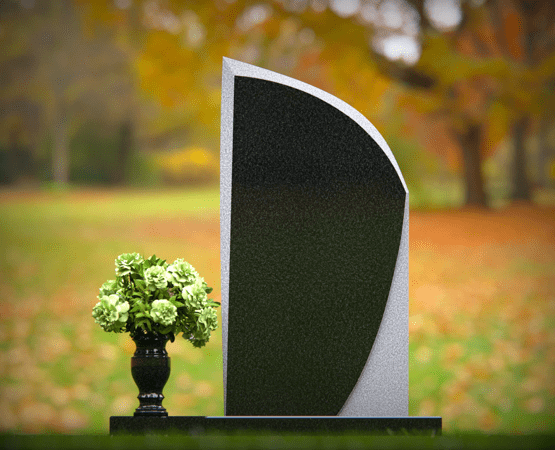
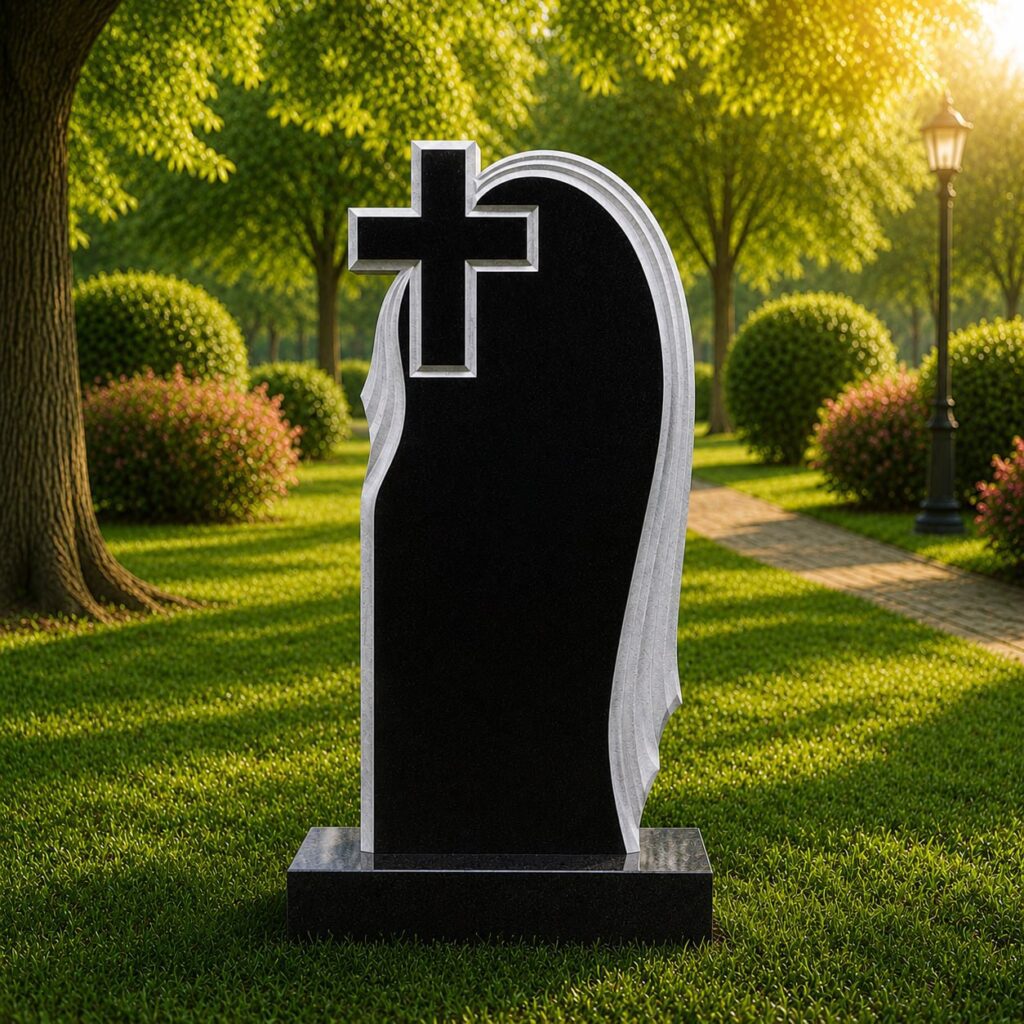
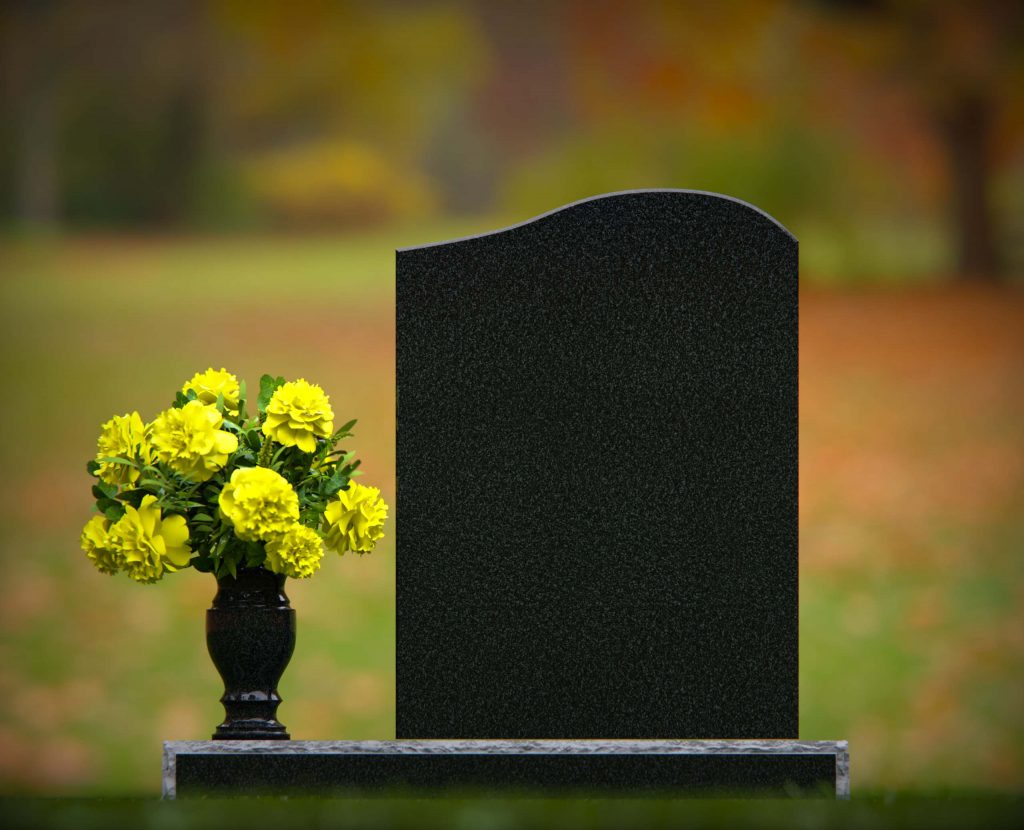
The most traditional and majestic option, the upright monument, consists of two distinct pieces: the base (which rests on the foundation) and the die (the vertical tablet). Upright granite monuments offer the largest canvas for intricate artwork, extensive text, and complex custom shapes, such as hearts, teardrops, or heavily sculpted borders.
Granite Headstone Styles Comparison
| Style Category | Typical Dimensions (Single) | Visibility Level | Structural Characteristics | Best Suited For |
| Flat Marker | 24″ x 12″ x 4″ | Low (Must be viewed from above) | Flush with the ground; requires 4″ thickness for durability. | Minimalist designs; cemeteries with strict “lawn-level” rules. |
| Bevel (Pillow) | 24″ x 12″ x 6″ (tapering to 4″) | Moderate (Slight angle improves readability) | Low profile with a gentle back-to-front slope for drainage. | Upgrading from a flat marker while maintaining a low profile. |
| Slant Marker | 24″ x 10″ x 16″ | High (Easily read from a distance) | Steeply angled face, thick bottom tapering to a thinner top. | Excellent visibility without the full vertical height of an upright. |
| Upright Monument |
Die: 24″ x 8″ x 24″ Base: 36″ x 12″ x 6″ |
Maximum (Visible across the cemetery) | Two-piece construction (Die and Base); highly customizable. | Detailed storytelling, extensive epitaphs, and high-impact designs. |

4. Choosing the Granite Color and Surface Finish
Granite is quarried directly from the earth, meaning every single block has a unique granular structure. The color and the way the surface is finished will dramatically impact the legibility of the engravings and the overall mood of the headstone.
Premium Granite Colors
-
Absolute Black: This is the densest and most fine-grained granite available. It provides the highest possible contrast for laser etching and sandblasting. When highly polished, it acts almost like a mirror, making white or light-gray lettering stand out sharply.
-
Traditional Grays (Barre Gray, Georgia Gray): The most classic and recognizable colors in monumental masonry. Gray granite offers excellent structural integrity and a timeless aesthetic. Deeply cut, V-sunk lettering with black lithichrome paint works best here.
-
Rich Reds and Mahoganies (India Red, Mountain Red): These colors provide a warm, distinguished look. They look particularly striking with polished finishes and deeply carved, unpainted lettering that relies on natural shadows for contrast.
-
Deep Blues and Greens (Bahama Blue, Pearl Green): These exotic granites feature beautiful, flowing natural movements and crystalline structures. They are elegant and distinct, ideal for families looking for something unique yet deeply respectful.
Granite Finishes
The finish determines the texture and light reflection of the stone.
-
Polished: The surface is buffed until it is completely smooth and highly reflective, bringing out the deepest color of the granite. A monument can be “Polished 2” (front and back), “Polished 3” (front, back, and top), or “All Polished.”
-
Honed: Smooth to the touch but without the reflective shine. It provides a matte finish that looks incredibly sophisticated and is highly resistant to showing dust or water spots.
-
Steeled / Frosted: A lightly textured, non-reflective finish often used on the recessed areas of designs or text panels to create contrast against a polished background.
-
Pitched (Rock Pitch): A rough, natural-looking finish created by artisans chipping away the edges of the granite with a hammer and chisel. This is standard for the sides of upright bases and provides a rugged, grounded frame for the polished faces.
5. Typography, Engraving, and Visual Aesthetics
The final design phase is where the granite is transformed into a highly personal memorial. The layout must be balanced, ensuring that the visual hierarchy naturally guides the eye from the family name down to the individual details.
Font Selection and Sizing
Legibility should be the primary concern. Highly stylized script fonts can look beautiful on a screen, but when carved into granite, they can become difficult to read, especially from a distance.
-
Primary Text (Family Name): Usually carved in bold, strong serif or block fonts, sized between 3 to 5 inches.
-
Secondary Text (First Names and Dates): Typically sized between 1.5 to 2 inches using clear, easily readable fonts like Roman or Helvetica.
-
Epitaphs: Kept to 1 to 1.5 inches. To maintain a clean aesthetic, less is often more. Keep epitaphs deeply meaningful but concise to avoid cluttering the stone.
Laser Etching vs. Sandblasting
For those seeking an incredibly detailed, photographic aesthetic—where the final product mirrors the crispness and fidelity of a high-resolution image—laser etching on Absolute Black granite is the ultimate choice. Laser etching removes the polished surface at a microscopic level, creating highly detailed portraits, landscapes, or custom artwork.
For traditional, deeply carved lettering and standard emblems (like floral borders, religious symbols, or military insignia), sandblasting remains the superior technique. Sandblasting creates deep, tactile V-grooves in the granite that catch shadows and stand the test of time.
6. Designing for Longevity and Environment
When finalizing a design, it is essential to consider the local climate. Granite is virtually impervious to weather, but the finishes and engraving styles interact differently with the environment.
In regions with high rainfall or heavy tree canopies (such as the Pacific Northwest or dense Eastern states), flat markers and deeply carved, unpainted lettering are excellent choices, as water and organic matter can easily be washed away. In sun-drenched environments (like Southern California or Florida), highly polished surfaces will reflect intense UV light beautifully, while deeply shaded sandblasted lettering ensures that names and dates remain readable even in harsh midday glare.
Conclusion
Designing a granite headstone is a meticulous process that combines structural engineering, cemetery compliance, and deeply personal artistry. By starting with the exact dimensions required by the cemetery and carefully selecting the style, color, and finish of the granite, you build a solid foundation. From there, applying high-quality engravings, clear typography, and thoughtful layouts ensures that the final monument will be a pristine, enduring tribute that honors a legacy with perfect clarity and timeless grace.





 SUMMER SALE — 35% OFF IN-STOCK PRODUCTS WITH FULL PAYMENT — PROMOTION EXTENDED THROUGH AUGUST 31!
 10% OFF on installment plans
